Stainless Steel Wire Keychains and Shower Curtain Rings: A U.S. Buyer's Guide to Materials, Corrosion Testing and Import Compliance
Stainless Steel Wire Keychains and Shower Curtain Rings: A U.S. Buyer's Guide to Materials, Corrosion Testing and Import Compliance
Small metal hardware looks simple on a purchase order but is one of the most return-prone categories in U.S. retail. A keychain that snaps, a shower hook that rusts after six weeks of humidity, a set that arrives short-packed — each becomes a chargeback attached to your brand rather than the factory.
Material callouts matter more than unit price
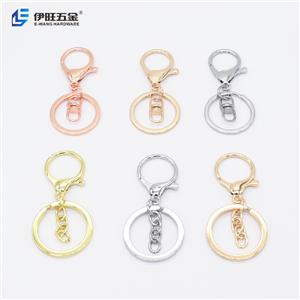
Two suppliers can quote the same key ring at very different prices because they are not quoting the same metal. Wire keychains are commonly made in 201 stainless steel, 304 stainless steel, or plain iron with electroplating. The difference is functional: 304 contains nickel and molybdenum that resist oxidation far better than 201, while iron depends entirely on plating thickness — and plating is where cost-cutting happens.
The same applies to shower rings and hooks, often stamped from iron then chrome, nickel or lacquer plated. A usable specification states base metal, plating type, wire or strip thickness and dimensions: a 12-piece shower hook set at 2.3 mm thickness, 72 mm length and 38 mm ring diameter in a PVC bag, or a stainless wire key ring at 1.5 mm × 150 mm packed 1,000 pieces per bag. If a quote lists only "metal" and a price, nothing is verifiable.
Corrosion is a test result, not a promise
"Rust proof" and "rust resistant" are marketing words. The reference method U.S. buyers write into specifications is ASTM B117, the standard practice for operating salt spray (fog) apparatus. A supplier running salt spray in-house can state how many hours a finish survived before red rust appeared — a number you can hold them to in a purchase agreement and re-check on incoming inspection.
Tensile testing matters for the same reason on wire-formed parts: a split ring fails when the wire opens under load, a function of diameter, temper and coil geometry. Suppliers running both a salt spray chamber and a tensile tester do checks you would otherwise outsource.
The compliance checklist first-time importers miss
California Proposition 65. Plated and brass parts can contain lead or other listed chemicals. Selling into California triggers exposure assessment and, where required, a warning — an obligation on the seller, not the factory.
CPSIA. Keychains or clips designed or marketed for children fall under children's product rules on lead, phthalates and third-party testing.
FTC "Made in USA" rule. Origin claims are enforced; goods made in China must be labeled accordingly.
HTS classification. Wire-formed rings and hooks typically fall under HTS 7326.20 (articles of iron or steel wire); mounted hardware may sit in 8302. Classification drives duty — confirm it with a customs broker before quoting landed cost.
Documentation. CE, EN 10204 inspection documents and ISO 9001 certification form the evidence package buyers now request.
Practical sourcing tips
Sample before you commit. Load a keyring, cycle a hook 200 times, leave a set in a steamy bathroom. Suppliers holding inventory ship samples immediately, freight only.
Match MOQ to your channel. Sensible ladders exist — a 12-piece shower hook set at 500 sets, a wire key ring at 100 pieces, with unit price stepping down at 1,000 and 5,000 pieces. An inflexible MOQ optimizes the supplier's line, not your sell-through.
Get lead time by scenario. Stock items needing only plating and packing move in days; custom color and packaging take longer. Ask for both numbers in writing.
Lock packaging early. Poly bag format, header cards, barcodes and assortment counts are where short-ship disputes start.
Where a specialist factory fits
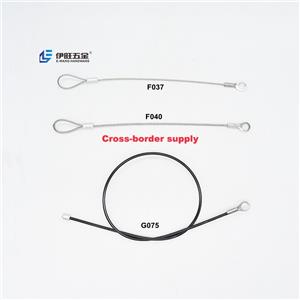
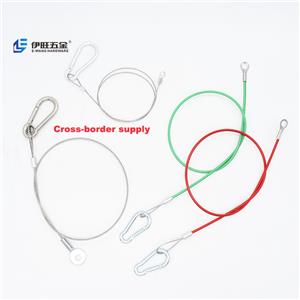
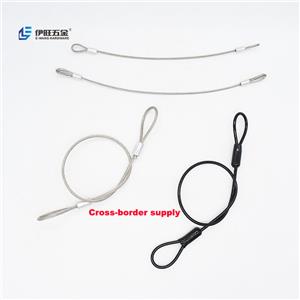
Foshan Yiwang Hardware Products Co., Ltd. (brands EWANG and YIWANG) is based in Danzao Town, Foshan, Guangdong — China's daily-hardware cluster — producing book rings, shower curtain hooks, supermarket display hooks, luggage hardware and custom wire forms across six product series. The 4,000 m² facility runs 93 production units — 34 stamping, 30 automatic coiling and 29 CNC stamping machines — sequenced through stamping, coiling, assembly, packaging and QC.
Five dedicated inspectors run QC with in-house salt spray and tensile testing. The company holds ISO 9001 management certification plus CE and EN 10204 documentation, and states that output meets U.S., Japanese, Korean and European standards. North America is its largest market at roughly 35% of revenue, alongside buyers in 25+ countries including Japan, Canada, Germany and South Korea; over 5,000 accounts have cooperated for more than 10 years. OEM and ODM orders are accepted, with customization covering logo, label, packaging, color, size and material replacement.
Stock items ship in about 3 days once plated and packed; standard delivery runs 7–15 days. Monthly capacity reaches 5 million pieces against inventory above 100,000 units, and a recent 180-day record shows 100% on-time shipment with zero disputes on a 4.9 seller rating. An 11-person sales team and 2 product development staff cover inquiry to shipment.
FAQ
Do keychains and bathroom hooks need different suppliers? Not necessarily — both are stamped and wire-formed parts sharing equipment, finishing and QC.
Is "rust proof" acceptable in a spec? No — specify base metal, plating type and salt spray hours, then verify on incoming inspection.
What is a realistic first order? Stock shower hook sets start at 500 sets and wire key rings at 100 pieces; 1–2 pieces are normally accepted for evaluation beforehand.
For U.S. buyers rebuilding a hardware program around fewer, better-documented suppliers, the decisive questions are technical: base metal, salt spray hours, and who signs the inspection report.