The Ultimate Guide to 3 Ring Loose Leaf Binders: Benefits, Uses, Buying Tips & Maintenance
This comprehensive guide dives deep into everything you need to know about 3 ring loose leaf binders, covering their core definition, structural design, unique advantages, diverse application scenarios, detailed classification, professional buying guides, maintenance tips, and frequently asked questions. Whether you are a consumer looking for high-quality daily-use binders, a stationery wholesaler sourcing bulk products, or a business owner optimizing office supplies procurement, this article will provide you with authoritative, in-depth, and practical reference information to help you make smarter purchasing and usage decisions.
1. What Is a 3 Ring Loose Leaf Binder? Core Definition & Basic Structure
1.1 Core Structural Components of 3 Ring Binders
A high-quality 3 ring loose leaf binder consists of multiple precision-made components, each playing an irreplaceable role in durability, usability, and aesthetics. Understanding the structure helps users identify high-quality products and avoid inferior alternatives during selection.
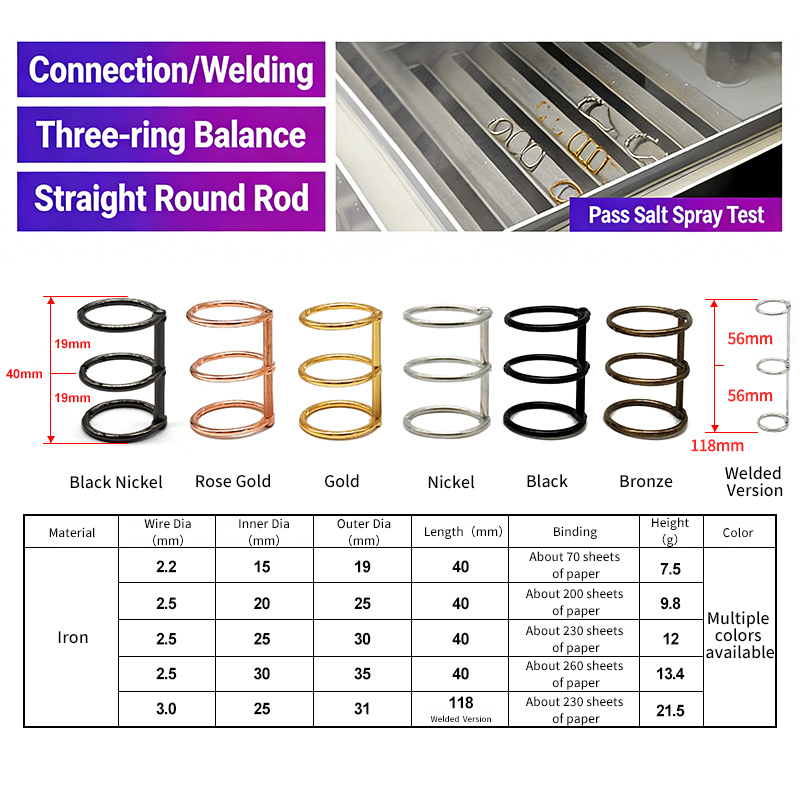
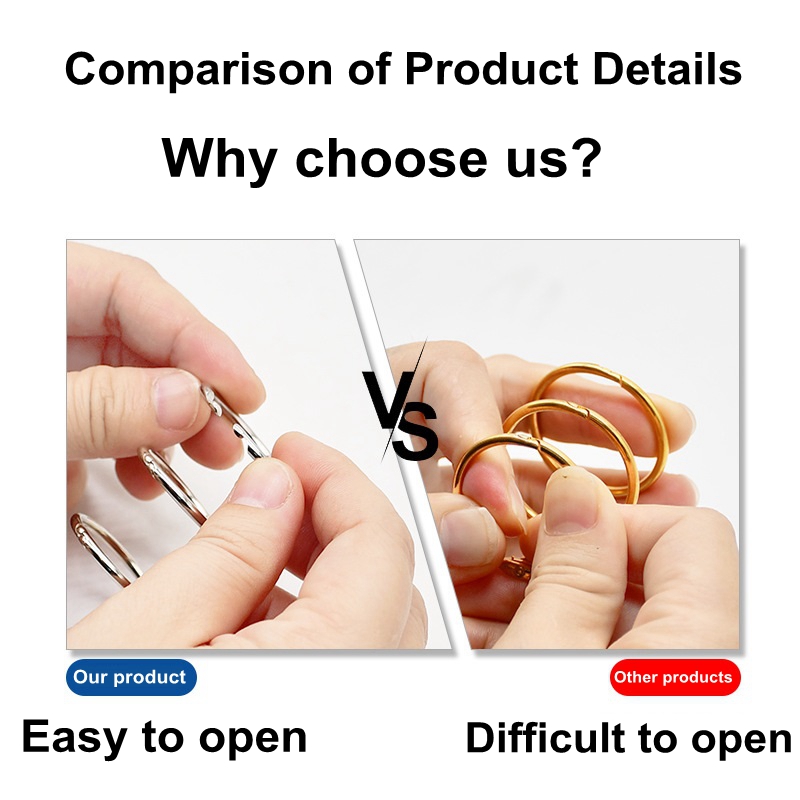
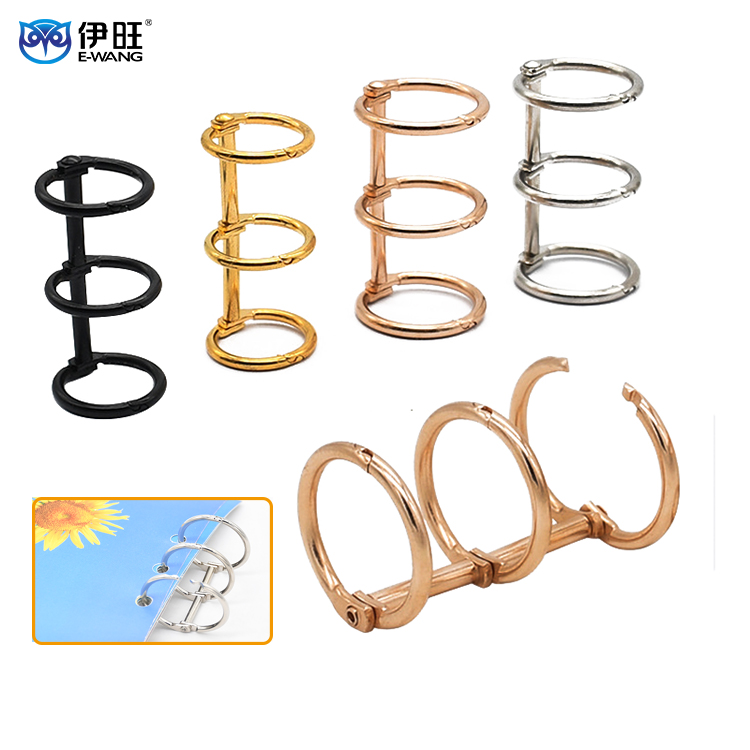
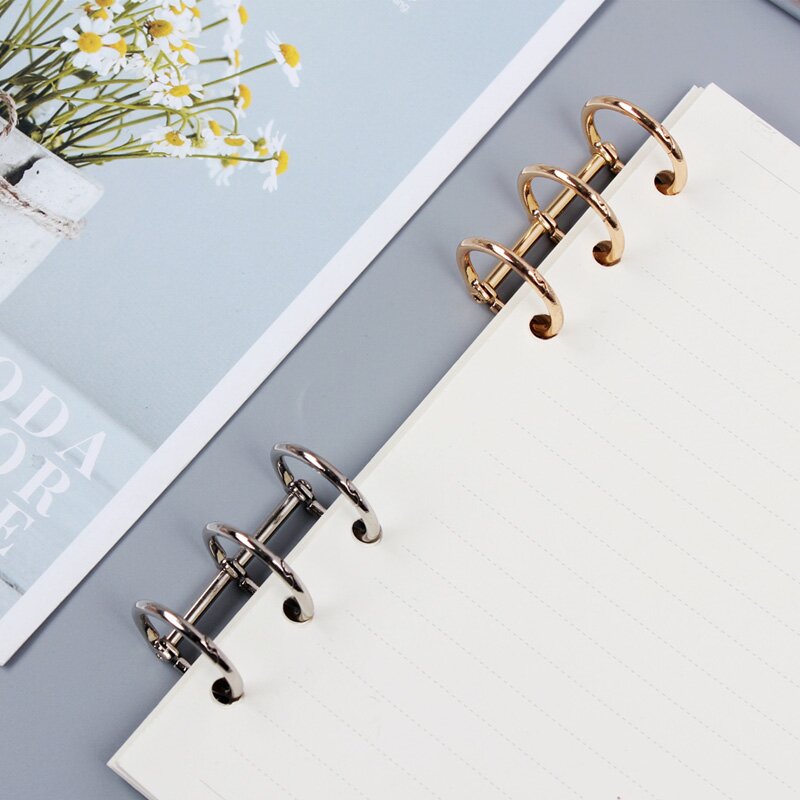
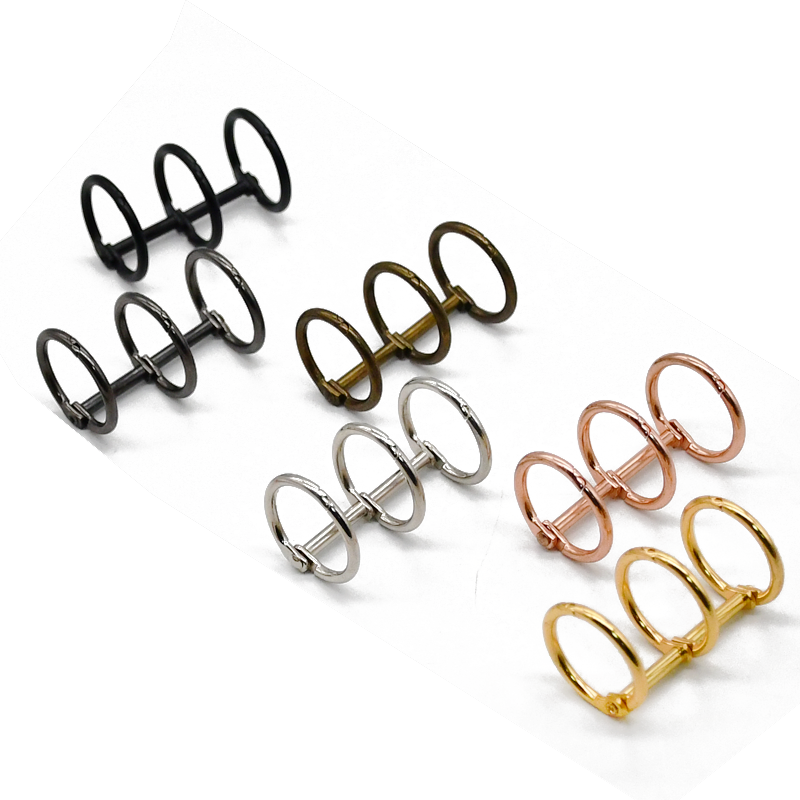
Metal Ring Mechanism: The core functional part of the binder, usually made of high-strength steel or iron electroplated with anti-rust coating. The three rings are divided into openable and closed types, with spring-loaded opening designs for easy page replacement. Common ring diameters include 0.5 inch, 1 inch, 1.5 inches, 2 inches, 3 inches, etc., determining the maximum paper capacity of the binder. Smooth ring edges prevent paper tearing, while thickened metal materials ensure long-term repeated opening and closing without deformation.
Binder Cover: The outer protective layer of the binder, available in multiple materials including PVC plastic, PP plastic, PU leather, kraft paper, and fabric. The cover is responsible for protecting internal documents from water, dust, wrinkles, and damage. Hardcover designs provide stronger compression resistance, while softcover designs are lightweight and portable. Most high-end binders adopt waterproof, wear-resistant, and scratch-proof coating treatments to extend service life.
2. Unique Advantages of 3 Ring Loose Leaf Binders Over Traditional Stationery
With the emergence of various new-type notebooks and electronic note-taking tools, 3 ring loose leaf binders still maintain irreplaceable market competitiveness, thanks to their unique functional advantages that perfectly match modern organizational needs. Compared with fixed notebooks, staple-bound documents, and single-paper storage methods, 3 ring binders have obvious superiority in flexibility, reusability, and systematic management.
2.1 Ultra-High Flexibility & Customization
The biggest advantage of loose leaf binders is free page adjustment. Fixed notebooks have fixed page numbers and fixed content sequences, making it impossible to modify or supplement content at will. In contrast, 3 ring loose leaf binders allow users to add new blank pages, delete invalid content, replace wrong pages, and rearrange page sequences according to actual needs. For students, they can supplement key knowledge points at any time; for office workers, they can update project documents and data in real time without reprinting the entire file.
In addition, users can freely match different types of loose leaf paper, including grid paper, lined paper, blank paper, dot grid paper, and special functional paper such as weekly planners, monthly calendars, and financial ledgers. Combined with dividers and index stickers, users can customize exclusive organizational systems suitable for study, work, and life scenarios.
2.2 Reusable & Eco-Friendly, Cost-Effective
Traditional fixed notebooks are disposable products. When the pages are used up or the content is no longer needed, the entire notebook can only be discarded, resulting in serious waste of resources and increased long-term usage costs. The 3 ring loose leaf binder realizes separation of shell and pages: the durable binder shell can be reused for several years, and users only need to replace the internal loose leaf paper regularly.
This reusable feature greatly reduces stationery procurement costs for families, schools, and enterprises. At the same time, it reduces paper waste, conforms to the global environmental protection concept of low carbon and energy saving, and is a typical eco-friendly stationery product favored by modern consumers.
3. Detailed Classification of 3 Ring Loose Leaf Binders
3 ring loose leaf binders have rich product categories, which can be classified according to size, material, ring type, capacity, and usage function. Clear classification helps users select the most suitable products according to their actual usage scenarios. Below is a detailed classification and feature analysis of mainstream 3 ring binders on the market.
3.1 Classification by Size (Mainstream International Sizes)
A4 Size 3 Ring Binder: The most mainstream universal size, suitable for storing standard A4 documents, test papers, office contracts, and project files. It is the preferred size for school study, office work, and enterprise file management, with the largest market demand and the most complete supporting accessories.
A5 Size 3 Ring Binder: Compact and portable, small in size and light in weight, suitable for daily note-taking, meeting records, travel logs, and personal planning. It is the best choice for portable daily use and is widely favored by office workers and journal lovers.
Letter Size Binder: Exclusive standard size for the North American market, matching US official documents, textbooks, and test papers, widely used in American and Canadian schools and enterprises.
Mini Size Binder: Including A6 and pocket sizes, ultra-portable, suitable for recording to-do lists, key reminders, and small card storage, ideal for daily portable memo use.
3.2 Classification by Cover Material
PVC Hardcover Binder: The most classic and cost-effective type. The hard PVC cover is waterproof, wear-resistant, anti-fouling, and not easy to deform. It has strong compression resistance, suitable for long-term file storage and daily high-frequency use. It is the mainstream choice for schools and corporate office supplies.
4. Diverse Application Scenarios of 3 Ring Loose Leaf Binders
4.1 Student Learning Scenarios (Primary, Secondary & University)
3 ring loose leaf binders are essential stationery for student learning, solving the problems of scattered notes, messy test papers, and difficult knowledge sorting. For primary and secondary school students, A4 3 ring binders can be used to sort subject notes, unit test papers, error question collections, and homework records. Through classified dividers, students can systematically organize the knowledge points of each subject, form a complete knowledge system, and facilitate daily review and pre-exam consolidation.
For college students, loose leaf binders are suitable for professional course notes, experimental reports, internship materials, and thesis data sorting. The freely adjustable page function allows students to supplement frontier professional knowledge and experimental data at any time, and rearrange content according to the learning progress.
4.2 Office & Business Workplace Scenarios
In modern office environments, standardized document management is the key to improving team work efficiency. 3 ring loose leaf binders are widely used for sorting meeting minutes, project plans, customer information, business contracts, financial statements, and work reports. Enterprises can use customized binders with corporate logos to unify office supplies, improve corporate image, and realize standardized internal document management.
Business travelers can use multi-functional PU leather 3 ring binders to store negotiation documents, product brochures, and customer data. The locked ring design ensures the safety of business documents during travel, and the built-in pen loop and card slot meet the portable needs of business work.
5. Professional Buying Guide: How to Choose High-Quality 3 Ring Loose Leaf Binders
5.1 Confirm Size & Capacity According to Usage Needs
First of all, clarify the usage scenario and select the appropriate size and capacity. For storing standard office documents, test papers, and large-capacity files, prioritize A4 size binders with 1.5-inch or 2-inch rings to meet daily storage needs. For portable daily note-taking and meeting records, choose lightweight A5 size binders with 0.5-inch or 1-inch rings to avoid bulky volume.
Do not blindly pursue large capacity: oversized rings will make the binder heavy and inconvenient to carry, while too small capacity will lead to insufficient storage space and frequent replacement. It is recommended to reserve 20% spare capacity on the basis of daily usage to meet subsequent content supplementation needs.
5.2 Check Core Material & Production Technology
Ring Mechanism Inspection: High-quality rings are made of thickened high-carbon steel with smooth electroplated surfaces, no burrs, uniform opening and closing elasticity, and no jamming or deformation after repeated use. Inferior rings are thin in material, easy to rust, with rough edges that will scratch and tear paper. It is recommended to choose fully electroplated anti-rust ring products for long-term use.
6. Conclusion: The Eternal Value of 3 Ring Loose Leaf Binders in Modern Life
In the era of digital information explosion, electronic storage tools are fast and convenient, but they cannot replace the sense of ritual, practicality, and systematicness of physical paper records. The 3 ring loose leaf binder, as a classic organizational stationery that has been passed down for decades, has always adhered to the core concept of "flexible organization, efficient management, and sustainable use", continuously iterating and upgrading with the changes of modern usage needs.