The Ultimate Guide to Curtain Clips: Types, Uses, Installation, and Buying Tips for 2026
1. What Are Curtain Clips? Core Definition & Working Mechanism
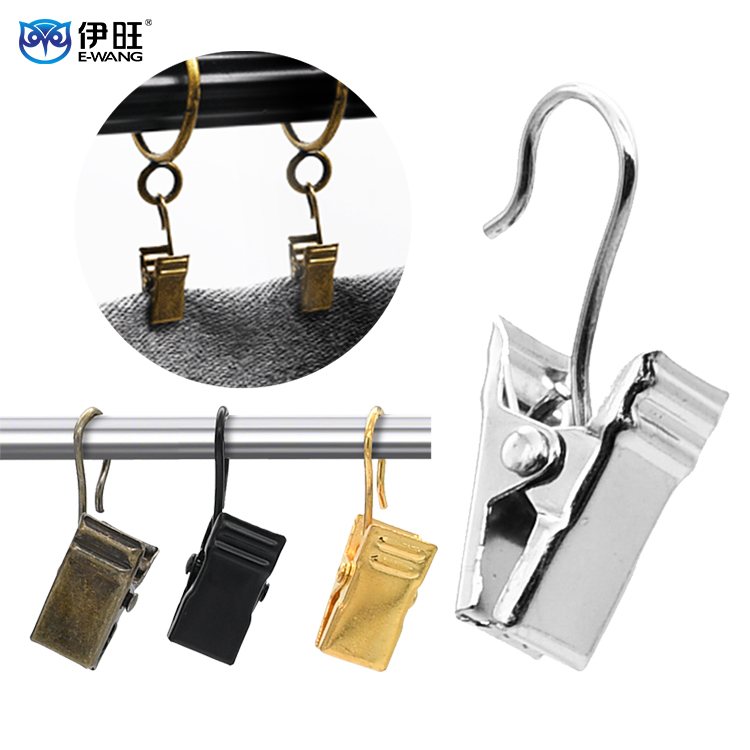
Curtain clips are specialized reusable hardware designed to fasten curtain fabric to curtain rods and track systems. Structurally, every standard curtain clip consists of two core components: a spring-loaded clamping jaw for securing fabric and a smooth sliding ring or hook for moving freely along mounting rods. This dual functional design creates a stable, detachable connection between curtains and mounting hardware, completely removing the need for invasive fabric alterations that damage curtain material over time.
2. Key Benefits of Using Curtain Clips for Window Treatments
Curtain clips have become the top choice for modern window treatments due to their unique advantages over traditional hanging solutions. Their multi-dimensional benefits cover fabric protection, styling flexibility, cost efficiency, and user convenience, catering to the diverse needs of household users and professional designers.
2.1 Zero Permanent Fabric Damage
Traditional curtain installation methods cause irreversible damage to curtain fabric. Grommet installation requires punching holes in fabric, weakening edge fibers and leading to gradual fraying and tearing with daily use. Sewn curtain hooks leave permanent stitch marks and restrict repeated curtain adjustments. Rod pockets force fabric into rigid folds that distort over time. In contrast, premium curtain clips adopt a non-invasive physical clamping method. Their rounded, smooth jaw edges grip fabric gently and firmly without piercing, cutting, or scratching materials. This protective design preserves the original integrity of delicate fabrics including silk, chiffon, linen, and sheer polyester, greatly extending the service life of high-value curtain panels.
2.2 Unlimited Styling Flexibility
One of the biggest strengths of curtain clips is customizable draping effects. Users can adjust clip spacing freely to create distinct visual styles: narrow spacing delivers tight, uniform, formal folds suitable for dining rooms and formal living spaces, while wider spacing creates soft, billowy, casual folds perfect for bedrooms and cozy lounge areas. Additionally, curtain clips support multi-layer curtain matching, allowing users to easily combine sheer light-filtering curtains with thick blackout drapes, hang decorative valances above full-length panels, and create personalized asymmetrical window layouts. Unlike fixed hanging styles that lock in a single design, curtain clips enable effortless decor updates to match seasonal trends, furniture renovations, and aesthetic preferences.
3. Common Types of Curtain Clips: Features & Ideal Applications
Different curtain clip designs are engineered for specific fabric weights, aesthetic needs, and usage environments. Choosing the right clip type is critical to avoiding slipping, fabric damage, and awkward draping effects. Below is a detailed classification of the five most popular curtain clip types on the 2026 market, with professional analysis of their features, pros, cons, and applicable scenarios.
3.1 Classic Ring Curtain Clips (Most Versatile)
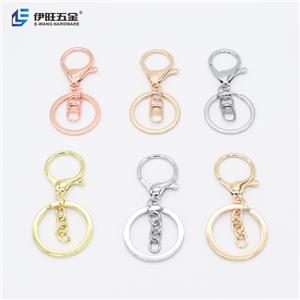
Classic ring curtain clips are the most mainstream and widely used option for residential window treatments. Each unit integrates a standard sliding ring and a miniature spring clip fixed at the ring’s base. Designed to fit common 1-inch to 1.5-inch household curtain rods, these clips offer universal compatibility with ordinary indoor window setups.
Key Features: Minimalist circular structure, stable calibrated spring tension, smooth gliding performance, anti-slip jaw design, and durable electroplated anti-rust finishes on premium models.
Ideal Applications: Medium-weight cotton, linen, and polyester blend curtains in living rooms, bedrooms, dining rooms, and home offices. Suitable for all mainstream interior decor styles.
Pros: Balanced functionality and aesthetics, affordable pricing, easy installation, uniform draping effects, excellent reusability, and wide market availability.
Cons: Standard ring sizes cannot fit ultra-thin tension rods or oversized custom rods; basic budget models lack sufficient grip for extra-heavy fabrics.
3.2 Alligator Curtain Clips (Heavy-Duty Performance)
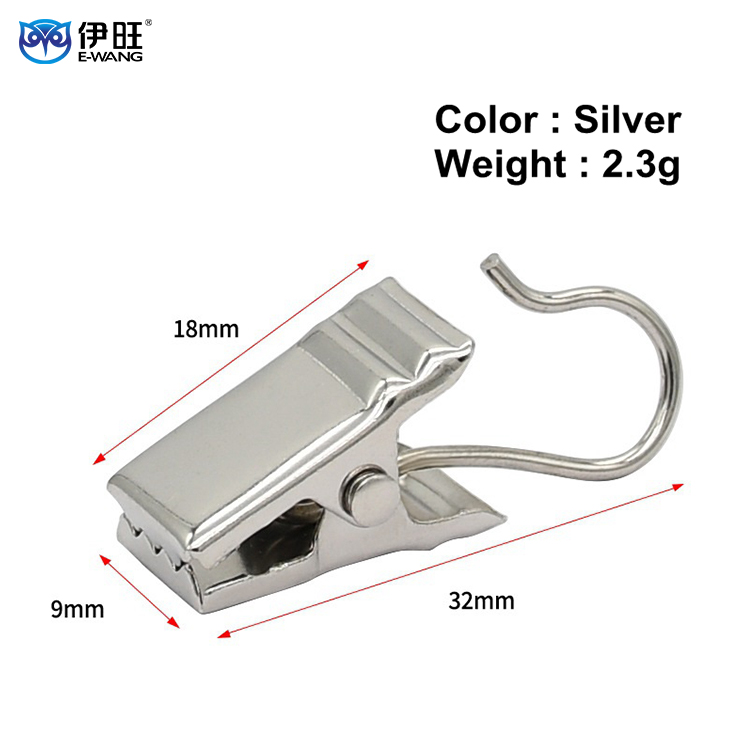
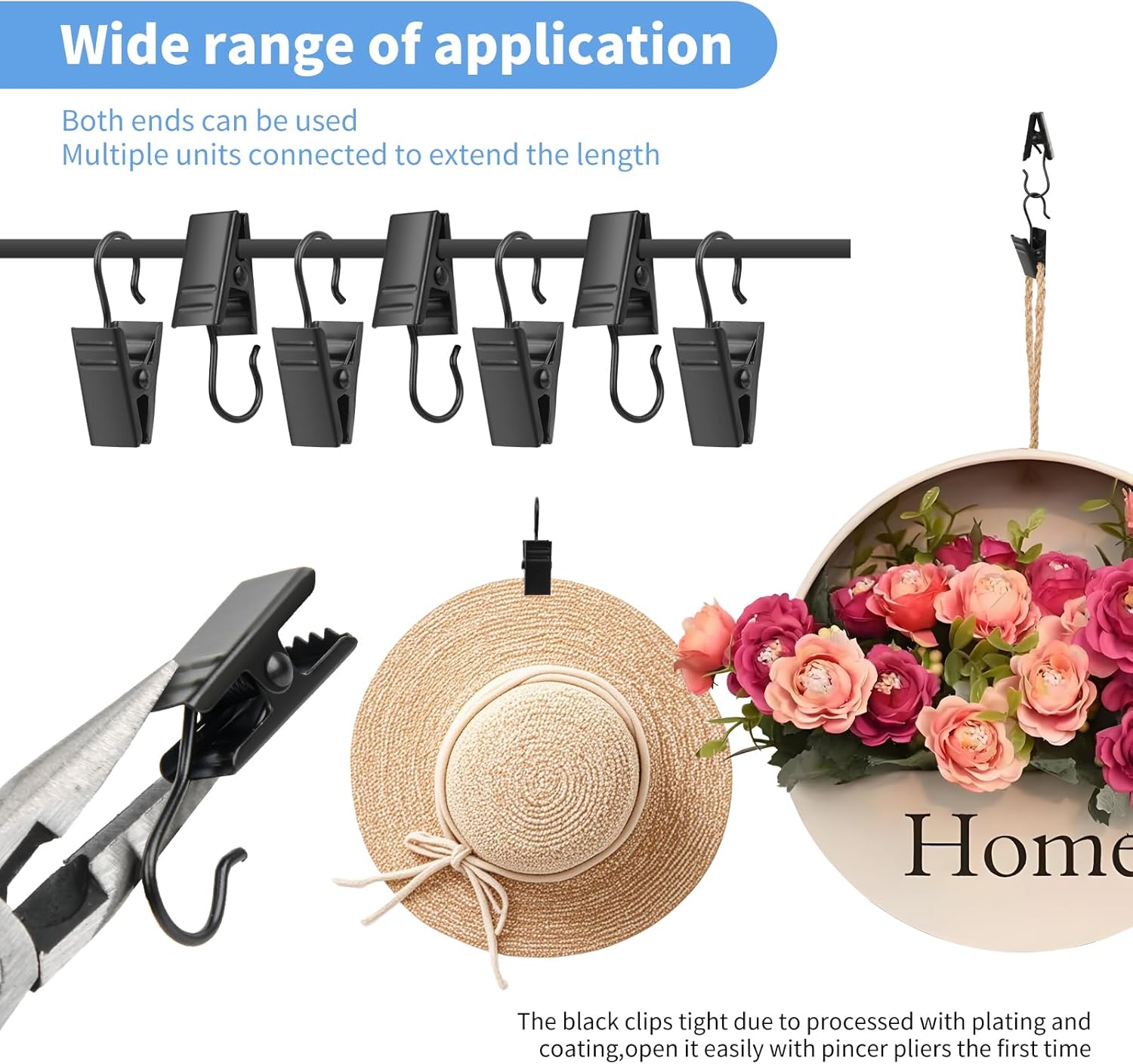
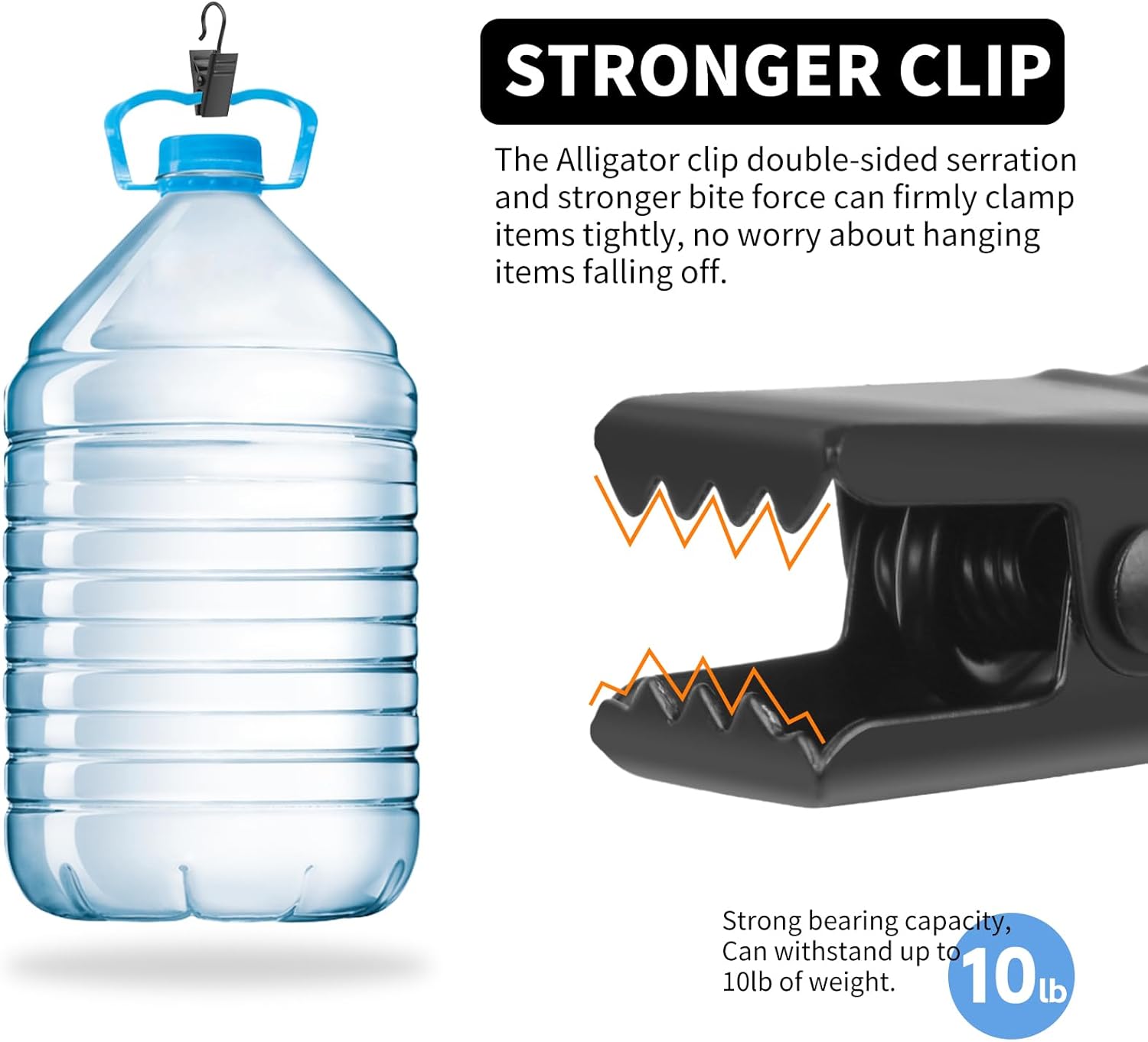
Also known as crocodile clips, alligator curtain clips are heavy-duty hardware optimized for thick, heavy curtain panels. They feature elongated, serrated clamping jaws that maximize fabric contact area, paired with reinforced high-tension springs for powerful, non-slip gripping force. Most alligator clip models adopt a hook design instead of a full ring, making them compatible with both curtain rods and track systems.
4. Curtain Clip Materials: Pros, Cons & Best Use Cases
Clip material directly determines durability, rust resistance, grip stability, and service life. The three mainstream materials for modern curtain clips are premium metal alloys, plastic, and magnetic metal composites. Each material has unique characteristics suited for different usage scenarios and environmental conditions.
4.1 Metal Alloy Clips (Premium Durable Choice)
Stainless steel and zinc alloy are the highest-quality, most widely used materials for long-lasting curtain clips. Premium metal clips undergo electroplating, oxidation resistance, and surface polishing treatments to enhance hardness and corrosion resistance. They feature strong, non-deformable spring tension and stable load-bearing capacity, resisting fatigue even after thousands of uses.
Pros: Long 5–10 year service life, anti-deformation, strong universal grip, rust and scratch resistance, weatherproof for outdoor use, and suitable for all fabric weights.
Cons: Slightly higher cost than plastic clips; unpolished low-grade metal may rust in humid environments.
Best For: Long-term household use, heavy curtains, high-humidity kitchens and bathrooms, and outdoor patio window treatments.
4.2 Plastic Curtain Clips (Budget Temporary Option)
Made from lightweight ABS or PVC plastic, plastic curtain clips are the most affordable entry-level option. They feature smooth burr-free edges, complete rust resistance, and customizable colors for seamless visual blending with curtain and rod systems. Their lightweight structure reduces overall rod load pressure.
Pros: Ultra-low cost, rust-proof, lightweight, color versatile, no metal scratching risks, and ideal for temporary use.
Cons: Weak spring tension that loosens over time, prone to cracking and deformation under heavy loads, and poor long-term durability.
Best For: Short-term rentals, temporary decor updates, lightweight sheer curtains, and low-budget decoration projects.

5. Step-by-Step Professional Curtain Clip Installation Guide
Correct installation is essential to achieve neat, symmetrical, and durable curtain drapes. Improper clip spacing and placement often cause uneven folds, fabric sagging, and slipping issues. Follow this professional step-by-step guide for flawless results.
5.1 Pre-Installation Preparation
Prepare basic tools including a measuring tape, tailor’s chalk or fabric pins, and matched curtain clips. Measure the curtain rod diameter to confirm clip ring compatibility. Clean rod surfaces thoroughly to remove dust, grease, and debris that may cause uneven sliding. Lay curtain panels flat on a clean surface to eliminate wrinkles and ensure uniform placement.
5.2 Confirm Scientific Clip Spacing
Spacing directly affects drape fullness and stability. Follow industry-standard rules: 4–6 inch spacing for lightweight sheer curtains for tight uniform folds; 6–8 inch spacing for medium cotton and linen curtains for balanced soft folds; 3–5 inch spacing for heavy blackout and velvet curtains to distribute weight evenly and prevent sagging. A standard 60-inch wide curtain panel requires 7–9 sheer clips, 8–10 medium fabric clips, and 10–12 heavy fabric clips.
5.3 Mark Accurate Placement Points
Mark evenly spaced points along the curtain’s top edge with chalk or pins, keeping all marks 0.5 inches below the fabric top. This reserved margin ensures firm clamping while hiding clip jaws completely behind the curtain for a clean, polished look.
6. Professional Buying Guide: Choose the Best Curtain Clips
With countless curtain clip options on the market, targeted selection based on practical needs ensures long-term usability and cost efficiency. Follow these professional criteria to pick ideal clips for your space.
6.1 Match Clip Type to Fabric Weight
Fabric weight is the core selection standard. Light sheer and lace fabrics suit mini discreet or magnetic clips for gentle protection. Medium cotton and linen blends pair best with classic ring clips for balanced performance. Heavy blackout, velvet, and outdoor canvas fabrics require reinforced alligator clips for anti-slip heavy-duty support.
6.2 Select Rustproof Materials for Humid & Outdoor Spaces
Bathrooms, kitchens, and outdoor patios have high humidity and moisture that cause ordinary iron clips to rust rapidly, leaving permanent stains on curtains. For these environments, always choose electroplated stainless steel or zinc alloy clips with anti-oxidation coatings, and avoid uncoated low-grade iron clips entirely.
7. Final Thoughts
Professional window treatments rely on exquisite details, and curtain clips are the transformative small hardware that upgrades overall interior aesthetics. Beyond basic hanging functions, high-quality curtain clips deliver flexible styling, durable performance, fabric protection, and long-term cost savings for every household. By mastering clip types, material characteristics, installation skills, and maintenance methods, you can avoid common decoration pitfalls and create elegant, neat, and long-lasting window treatments. Ditch rigid permanent hardware and choose premium curtain clips to unlock unlimited personalized styling possibilities for your home in 2026.