The Complete Guide to Metal Curtain Clips for Shower Curtains: Materials, Types, and Buyer’s Guide
# The Complete Guide to Metal Curtain Clips for Shower Curtains: Materials, Types, and Buyer’s Guide
**Metal curtain clips** are among the most overlooked yet functionally critical accessories in a bathroom. While the shower curtain itself draws the eye, the clips that hold it in place determine whether water stays inside the tub, whether the liner clings uncomfortably during a shower, and whether the hardware survives years of steam and humidity without rusting. For homeowners, hoteliers, and independent retailers sourcing bathroom hardware, understanding the distinctions between clip styles, materials, and mounting methods is essential for making informed purchasing decisions.
This guide examines metal shower curtain clips from every practical angle: the different locking mechanisms, the metals that perform best in wet environments, installation considerations, and the design trends shaping the category in 2026.
## What Are Metal Curtain Clips and Why Do They Matter?
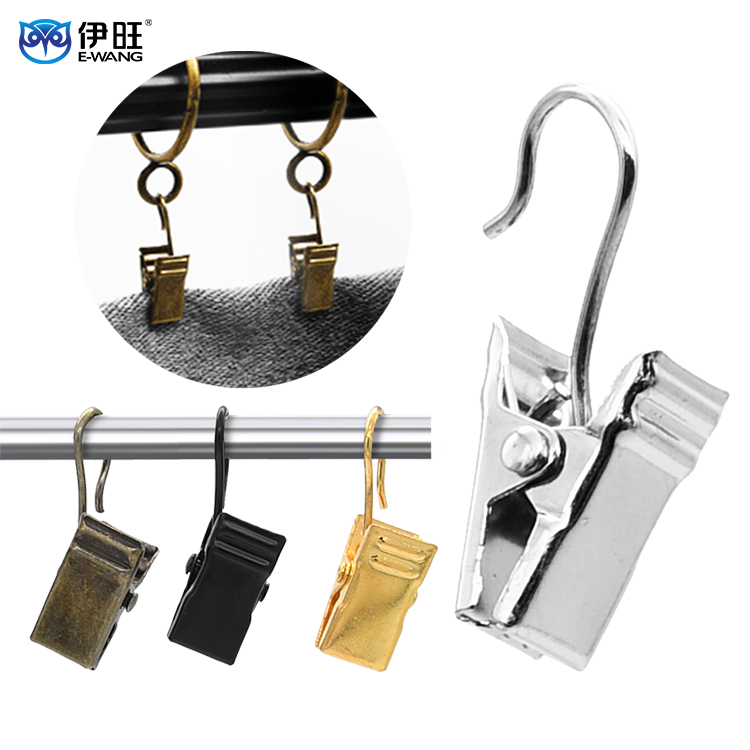
A metal curtain clip is a fastening device designed to secure a shower curtain or liner to a rod, to a wall, or to itself. Unlike traditional shower curtain rings, which simply loop over the rod and allow the curtain to hang freely, clips introduce an element of **constraint**. That constraint can serve several purposes: preventing the curtain from billowing inward during a shower, holding the curtain edge against the wall to block splashes, or gripping a fabric panel without requiring grommets or buttonholes.
The distinction matters because the failure modes are different. A ring that is too flimsy may snap under the weight of a heavy fabric curtain. A clip that lacks corrosion resistance will seize up or leave rust stains on the curtain and tub within months. And a clip with insufficient grip strength will allow the curtain to slip free at the worst possible moment—typically mid-shower, when the bather reaches for the shampoo.
In the broader market for shower curtain hooks and rings, metal remains the dominant material category, alongside copper and stainless steel variants . The global market for these accessories continues to grow as bathroom design places greater emphasis on coordinated hardware and durable materials. For independent retailers and brands, metal clips represent a high-margin, low-logistics-weight product that solves a genuine daily frustration for end users.
## The Core Functional Categories
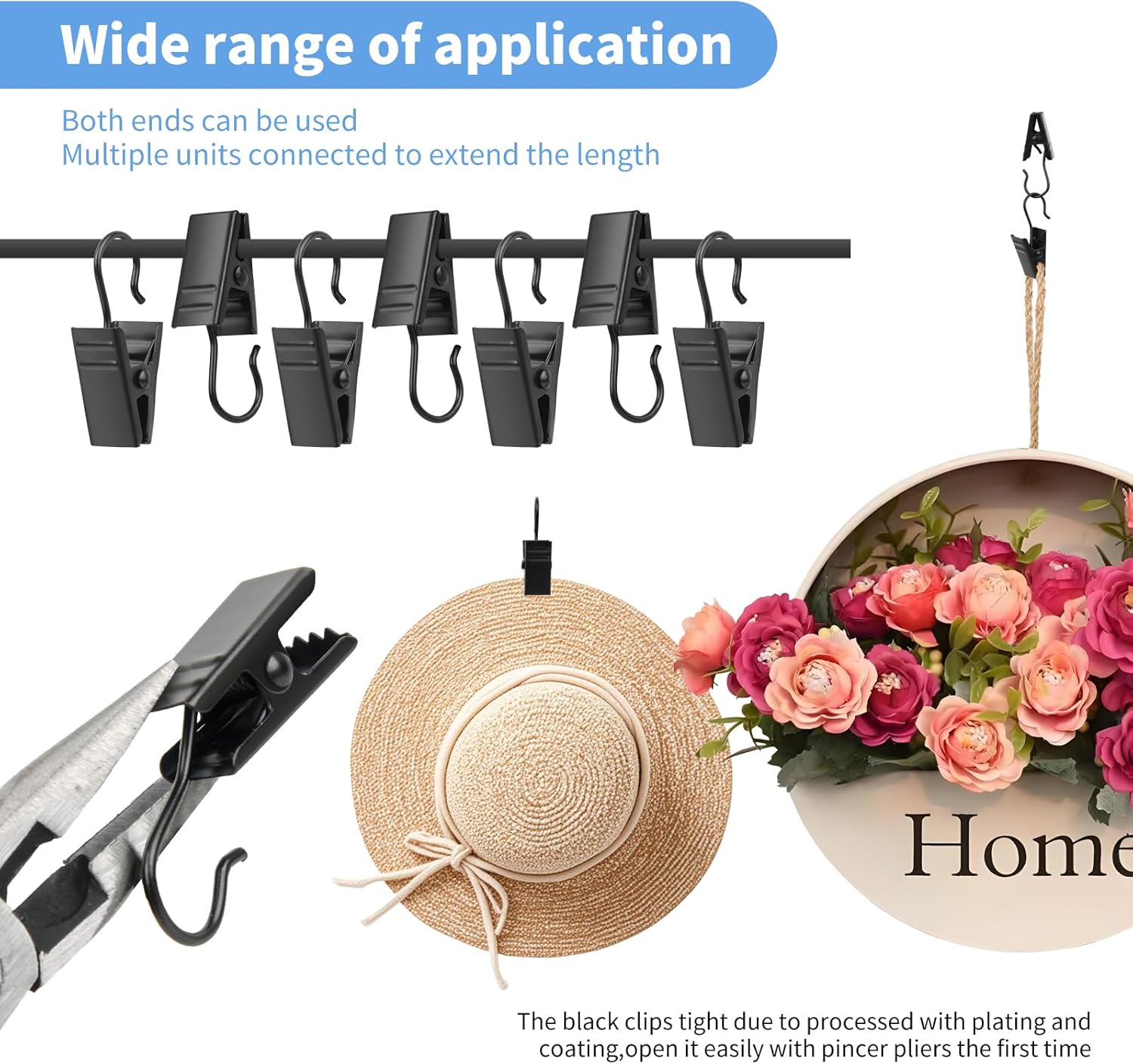
Not all metal curtain clips serve the same purpose. The category breaks down into three distinct functional types, each with its own design logic and ideal use case.
### Rod-Mounted Clips with Retention Members
The most specialized category involves clips that hook over the shower curtain rod and include a **retention member** designed to interface with the curtain without requiring traditional grommet holes. In one patented configuration, the clip features a square-shaped member that inserts into an elongated internal space sewn between fabric layers at the top of the curtain, while a lower horizontal member passes through a series of openings along the curtain’s upper edge . The result is a clean front profile: from the outside of the tub, the retention hardware is concealed within the curtain fabric, creating a smooth, unbroken visual line.
A refinement of this design includes a **cut-out** on the lower horizontal member specifically sized to accept a separate shower curtain liner. This allows the decorative outer curtain and the functional inner liner to hang from the same clip system while remaining independently removable for washing . For senior users or individuals with limited hand strength, this separation is a meaningful accessibility feature—the liner can be swapped out without wrestling with the entire curtain assembly.
These clips are typically constructed from stainless steel or zinc alloy with a polished or brushed finish. Because they bear the full weight of wet fabric and must slide along the rod during use, the smoothness of the hook portion is critical. A rough interior surface on the hook will create drag and premature wear on the rod finish.
### Wall-Adhesive Clips for Splash Control
A fundamentally different category solves a different problem: the shower curtain that billows inward, clings to the bather’s legs, and allows water to escape onto the bathroom floor. These clips are **not mounted on the rod** at all. Instead, they adhere to the smooth tile or glass surface of the shower enclosure and grip the edge of the curtain with a spring-loaded or crocodile-style jaw .
The appeal is straightforward. Water on the bathroom floor is a slip hazard, and moisture that seeps into grout lines or baseboards creates conditions for mold and mildew. By holding the curtain against the wall at one or two points, these clips keep the curtain plane closed and direct splash back into the tub . The adhesive backing must be applied to a thoroughly clean, dry surface—isopropyl alcohol is recommended for the final wipe—and allowed to set for several hours before exposure to steam. Removal requires care: warming the adhesive with a hair dryer and using a flat scraper reduces the risk of damaging the tile or paint .
For retailers, this subcategory appeals to renters and homeowners who cannot or will not drill into bathroom surfaces. It also has a natural upsell path: customers who buy one pack of two clips frequently return for a second pack once they realize that four clips—two on each side—provide more reliable curtain control.
### Decorative Rod Rings with Clip Functionality
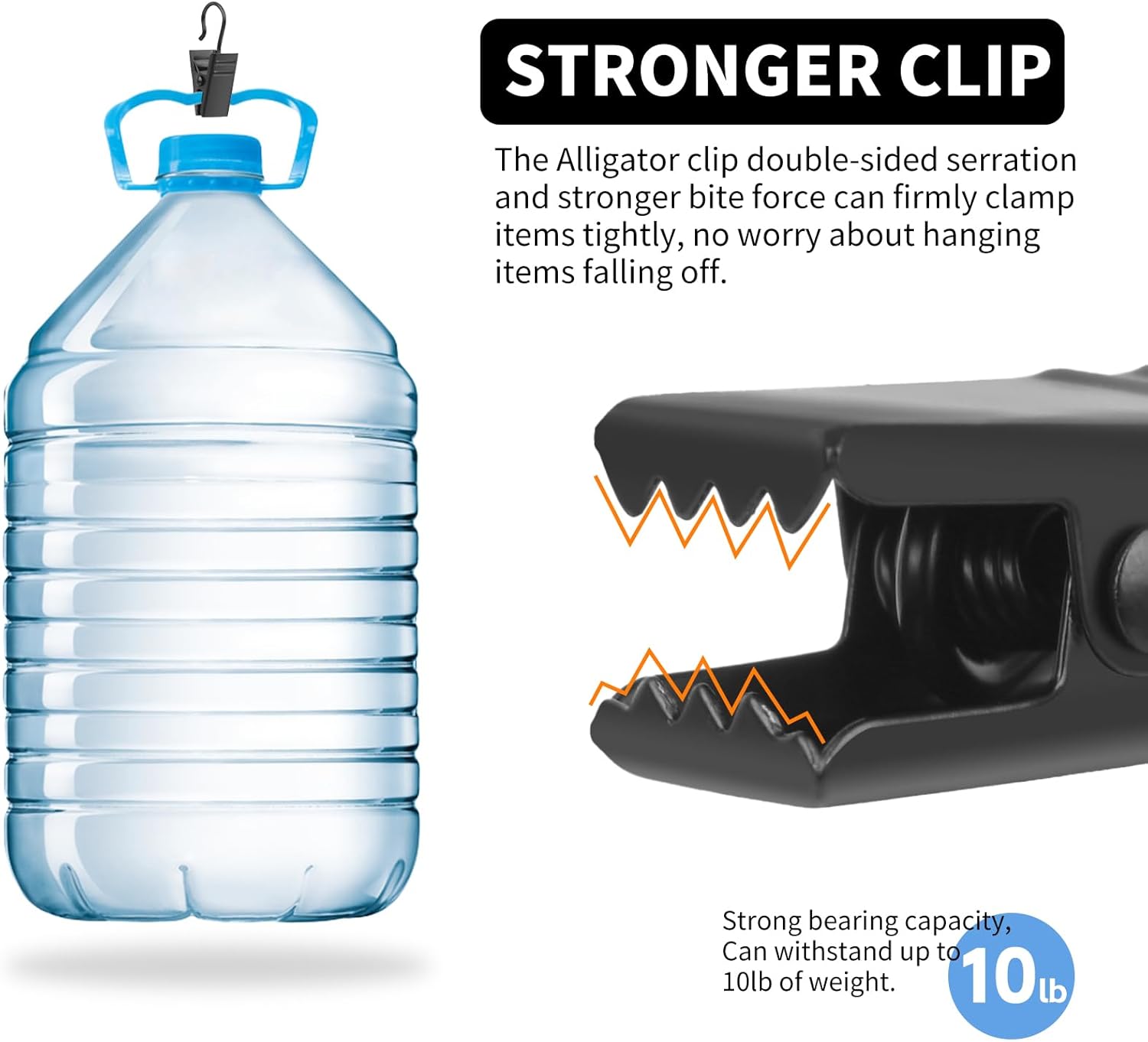
The third category blurs the line between clip and ring. These are essentially shower curtain rings that incorporate a **secondary hook or clip element**, allowing the user to hang both a decorative curtain and a liner from a single rod without doubling up on hardware. Double-sided stainless steel hooks, for example, place the curtain on an outer loop and the liner on an inner loop, both sliding on the same rod . This configuration solves the persistent problem of the liner billowing inward and clinging to the bather, because the liner’s weight is distributed across the same clip system as the heavier outer curtain.
Other designs in this category use a **glide ball or roller** integrated into the ring’s upper curve. The ball bears against the rod and reduces friction, so the curtain moves with a light push rather than a stutter . For a frequently used family bathroom, where the curtain is opened and closed dozens of times a day, glide quality arguably matters more than material thickness. A heavy-gauge stainless hook that drags will frustrate the user more than a lighter hook that glides smoothly.
## A Practical Buyer’s Checklist
For sourcing professionals and independent retailers evaluating metal curtain clips, the following criteria separate products that will generate repeat customers from those that generate returns.
**Corrosion resistance must be verified, not assumed.** “Rust-proof” is a marketing claim; salt spray testing results are evidence. Request test data for any stainless steel or plated product intended for bathroom use. Pay particular attention to the bend points and edges of plated items, where coating adhesion is most vulnerable.
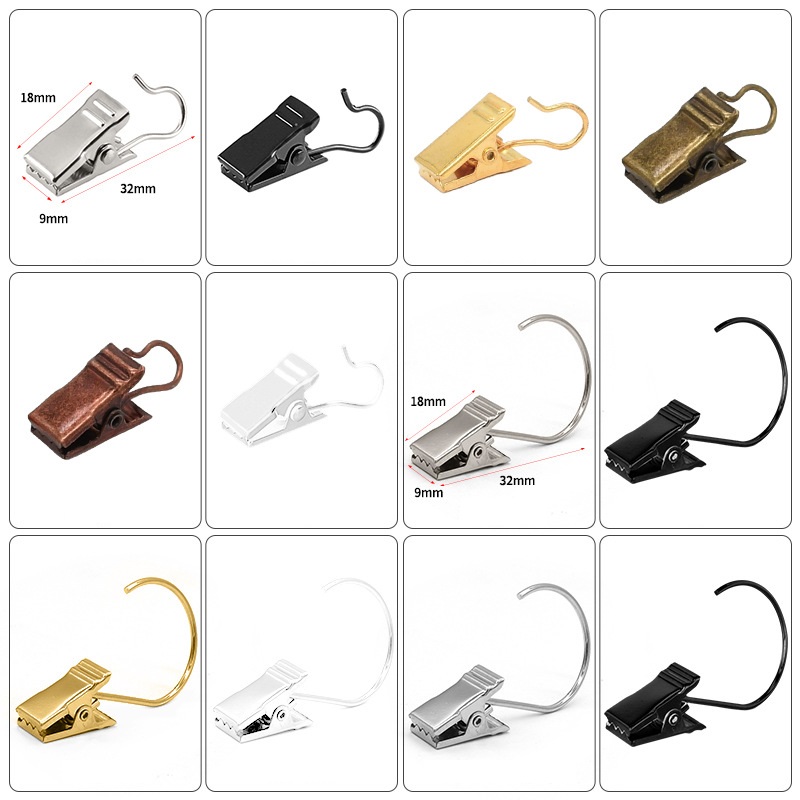
**Grip strength should match the intended fabric weight.** A clip designed for a lightweight polyester liner will not hold a heavy cotton duck outer curtain and liner combination. Suppliers should specify a recommended weight range per clip, and retailers should communicate that range clearly on the product page.
**Sliding smoothness is a tactile quality that cannot be photographed.** For rod-mounted clips, test how the hook travels on a standard 22–25 mm rod. A slight rocking motion should not cause the clip to catch. Glide balls or rollers are worth the added cost for high-use installations.
**Adhesive products require explicit surface compatibility guidance.** Wall-mounted clips that use adhesive backing will fail on textured surfaces, wallpaper, or unsealed paint. The product listing must state clearly that smooth tile, glass, and glazed porcelain are the intended substrates, and that the surface must be clean, dry, and allowed to set before exposure to moisture .
**Finish consistency across a production run matters for retail displays.** Chrome plating from different batches can vary noticeably in color temperature, from a warm nickel tone to a cool blue-white. For a brand selling multiples or sets, batch-to-batch consistency is as important as the finish quality itself.

## Conclusion
The metal curtain clip occupies a small space in the bathroom, but it carries a disproportionate share of the responsibility for a functional shower experience. The difference between a dry bathroom floor and a slippery one, between a curtain that stays where it is placed and one that billows and clings, often comes down to a few grams of stainless steel or a well-formulated adhesive pad.