Wire Keychains: The Small Hardware That Solves a Universal Problem
# Wire Keychains: The Small Hardware That Solves a Universal Problem
**The wire keychain is one of those rare products that does exactly what it promises with almost no ceremony. It holds things together, it opens and closes without a fight, and it outlasts the split ring it was designed to replace. For anyone running an independent e-commerce store, it also happens to be a quiet workhorse: low cost, high perceived utility, and endless customization potential.**
This article covers what wire keychains actually are, why they outperform traditional key rings in specific use cases, how to evaluate quality before sourcing, and how to position them on a standalone site without sounding like every other hardware listing on the internet.
## What a Wire Keychain Actually Is
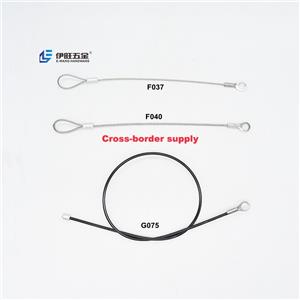
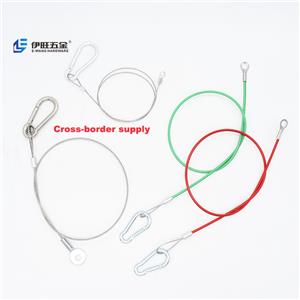
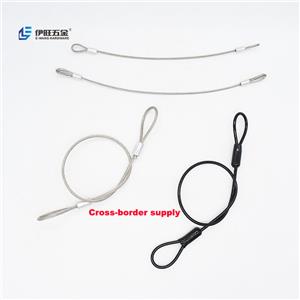
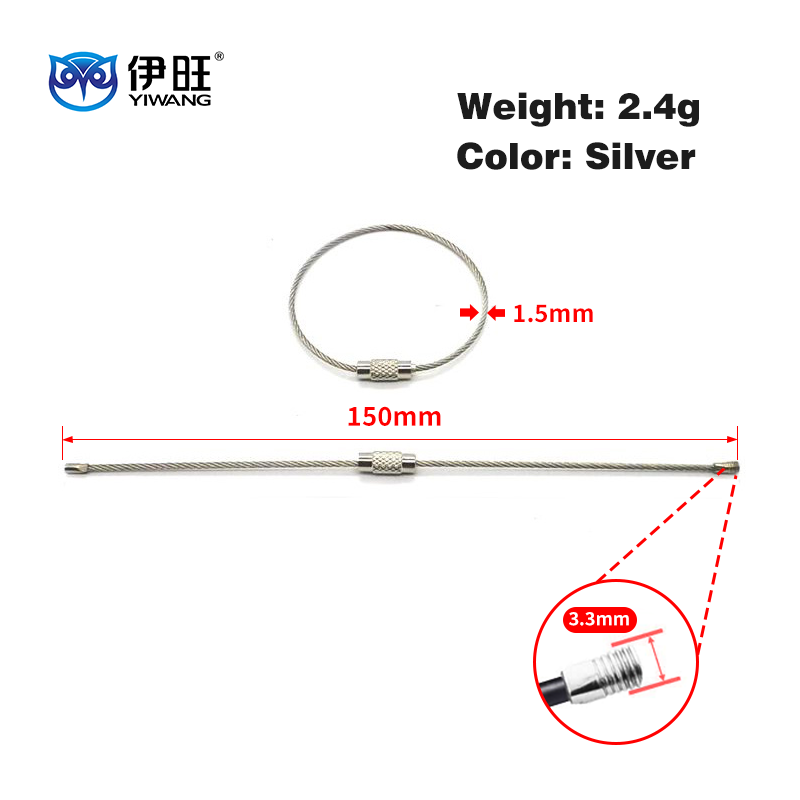
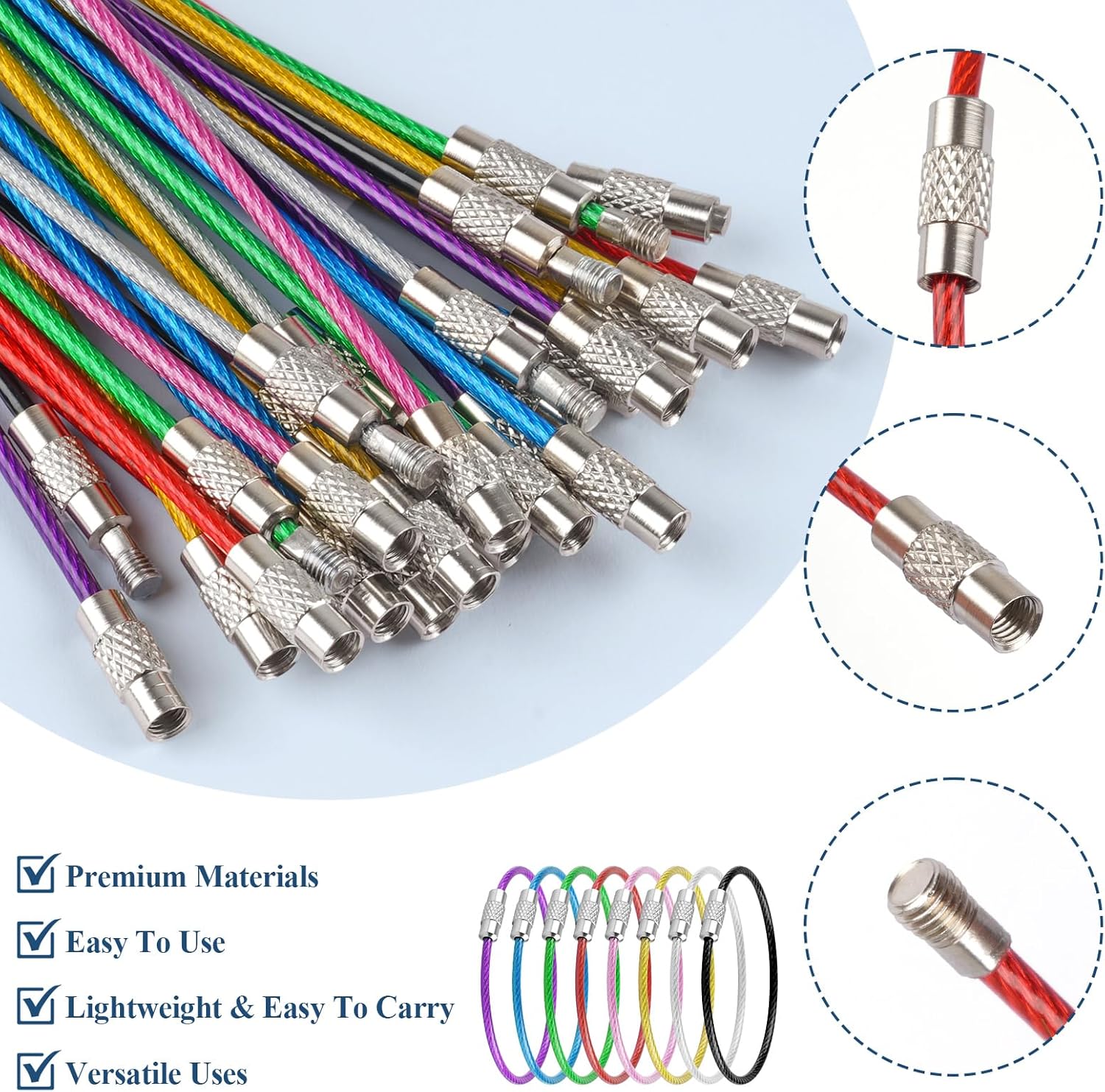
A wire keychain is a loop of steel cable—usually stainless steel—with a connector at the ends that screws or snaps shut. The core is rigid enough to hold its shape but flexible enough to bend without kinking. Most consumer versions wrap that steel core in a nylon or PVC coating, which serves two purposes: it protects surfaces from scratches and gives the product a color .
The defining feature is the closure. Unlike a split ring, which requires fingernails, patience, and occasionally a small sacrifice of skin, a wire keychain opens by unscrewing a barrel nut or releasing a snap connector. You thread on whatever needs threading, then close it again. That’s it.
Sizes range from short loops of about 4 inches (100mm) for a single key or tag, up to 10 inches (250mm) for bundling tools, cables, or multiple luggage tags . Wire thickness typically sits around 2mm for general-purpose use, with the better versions rated to hold significant weight—one Amazon listing claims 80 pounds without breaking, though that figure should be treated as a marketing ceiling rather than a guarantee .
---
## Why the Wire Keychain Beats the Split Ring (Sometimes)
The split ring is not a bad design. It has been around for over a century, it costs almost nothing, and it never accidentally opens. But it has three specific failure modes that wire keychains address directly.
**First, the split ring is hostile to changing contents.** Anyone who has tried to swap a key or add a tag to a crowded ring knows the drill: pry, twist, hope the whole thing doesn’t explode. A screw-lock wire loop takes seconds. This matters for people who rotate keys regularly—facilities staff, property managers, outdoor guides, or anyone who uses their keychain as a modular carry system rather than a permanent home for three house keys.
**Second, the split ring concentrates stress.** The constant opening and closing of a split ring, especially a cheap one, creates a fatigue point. Wire loops distribute force around the continuous cable. The difference is not dramatic in light use, but it becomes noticeable when the keychain is carrying weight or seeing daily manipulation .
**Third, the wire loop is easier on pockets and bags.** The coating prevents the metal-on-fabric abrasion that eventually wears through a jacket lining. The profile is slimmer than a loaded split ring, and there are no sharp ends waiting to catch on a thread.
That said, the wire keychain is not a universal upgrade. If you never change what’s on your keyring, a split ring is cheaper and simpler. The wire loop’s advantage is modularity. The moment “I need to add this” or “I need to take that off” becomes a recurring event, the calculus changes.
## Where Wire Keychains Actually Get Used
The product’s versatility is its strongest selling point, and the use cases split into a few distinct buckets.
**Outdoor and EDC carry.** Hikers, climbers, and everyday-carry enthusiasts use wire loops to attach smaller items to a main bag or belt loop—a flashlight, a folding knife, a ferro rod, a small pouch. The screw-lock closure means gear can be reconfigured without emptying the whole setup .
**Luggage and travel.** A bright-coated wire loop is an excellent luggage tag attachment because it cannot accidentally open in transit. Unlike a plastic strap, the steel core resists cutting and snapping. Travelers who check bags frequently tend to appreciate this more than they expect to .
**ID and access control.** Facilities teams, schools, and corporate offices use short wire loops for badge holders and access cards. The screw closure is secure enough for daily wear but quick enough to swap cards when someone changes departments or loses a badge .
**Retractable keychain systems.** Some retractable badge reels use a steel wire rope inside the housing instead of nylon cord. The wire is more resistant to the fraying that eventually kills nylon retractables, though it should not be pulled past its extension limit or the return spring will suffer . This is a different product category from the standalone wire loop, but it shares the same material logic: steel outlasts soft cord in high-cycle applications.
## What Separates a Good Wire Keychain from a Bad One
The wire keychain is a simple product, which means the quality differences are easy to spot once you know where to look. For anyone sourcing for an online store, these are the checkpoints that matter.
**The wire core.** Stainless steel is the baseline. Not “metal” or “alloy”—stainless. A 2mm stainless cable is the standard for general use . Thinner wire feels flimsy and deforms under load. Thicker wire is overkill for keys but appropriate for tool lanyards.
**The coating.** PVC and nylon are the two common options. PVC holds color well and resists abrasion; nylon is slightly softer and less likely to scuff delicate surfaces. The coating should be firmly bonded to the cable, not loose or peeling at the connector . On a cheap unit, the coating will slide along the wire like a loose sleeve. That’s a return waiting to happen.
**The connector.** Screw-lock barrel connectors are the most secure and the most common. The threads should engage smoothly without cross-threading, and the nut should be knurled enough to grip with fingers but not so aggressive that it chews up a pocket. A snap connector is faster but less secure; it has its place for low-risk applications like a temporary badge loop, but not for luggage .
**The finish at the ends.** Where the cable meets the connector, there should be no sharp burrs, no exposed wire strands, and no gap that could snag fabric. “Smooth surface, no burrs” is the phrase manufacturers use, and it is worth verifying with a physical sample rather than trusting a product photo .
**Load rating and honest specs.** A wire keychain holding three keys does not need a load rating. A wire keychain marketed for tool lanyards does. If a supplier claims a rating, ask for the test method. If they cannot provide it, treat the number as decoration.
## The Customization Angle for Independent Stores
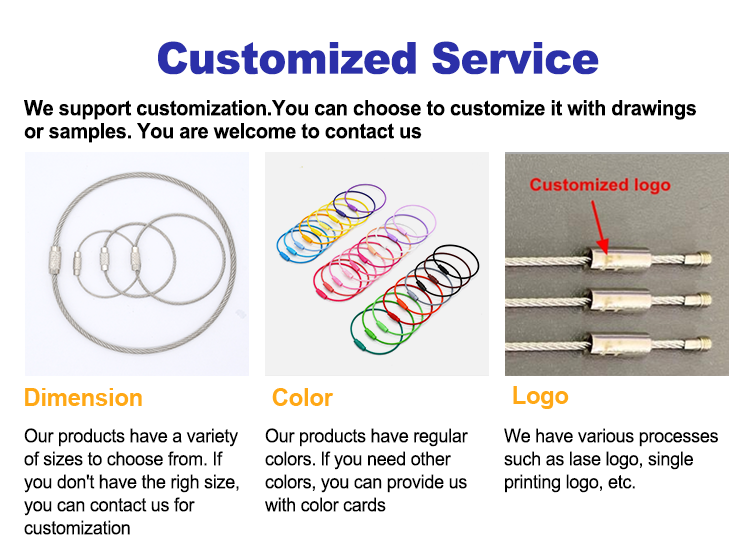
Wire keychains occupy a useful middle ground in the promotional and custom product space. They are more substantial than a printed lanyard but far cheaper than a custom leather or metal fob. The customization options are straightforward: coating color, loop length, connector type, and packaging .
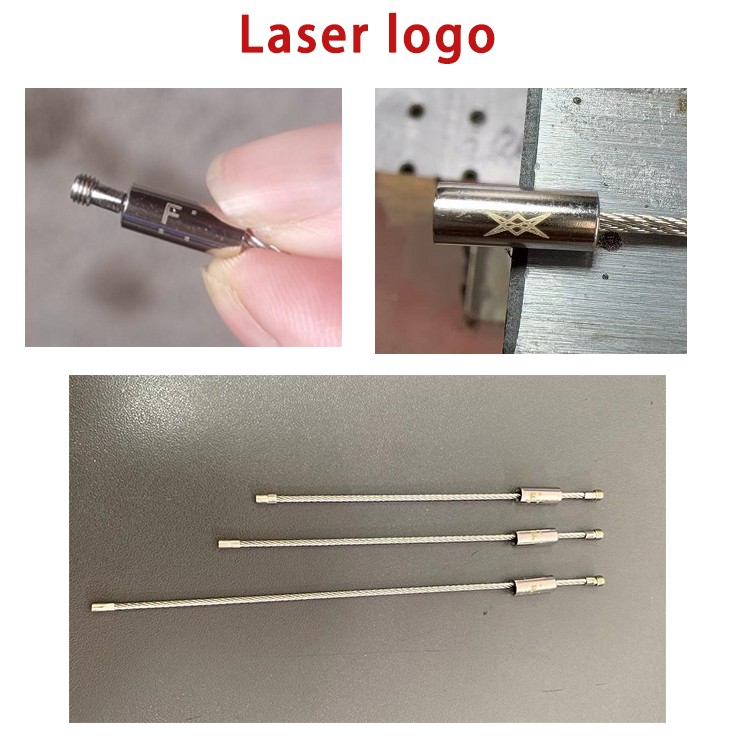
The branding constraint is real, though. A wire loop has very little surface area for a logo. The cable itself is thin, and the connector is small. That means the wire keychain is rarely the hero product in a branded merchandise lineup. It is the supporting act—the attachment hardware that pairs with a branded PVC tag, a leather fob, or a custom card. Smart sellers position it that way: sell the tag, include the loop, or offer the loop as the low-cost upsell that makes the main product more useful .
For a standalone site, the strongest angle is not “custom wire keychains for your brand.” It is “the hardware that makes your keychain actually work.” That framing is more honest to what the product does, and it attracts buyers who are solving a problem rather than shopping for a giveaway.
---
## Pricing and Sourcing Reality
Wholesale wire keychains sit at the very low end of the hardware spectrum. Bulk pricing from Chinese manufacturers commonly falls between $0.05 and $0.20 per unit, depending on wire thickness, coating, connector type, and order volume . Minimum order quantities vary wildly: some suppliers start at 50 or 100 pieces, others at 500 or 1,000 .
The low unit cost is both an opportunity and a trap. It is an opportunity because the margin structure on a $3–5 retail keychain is healthy even after shipping and packaging. It is a trap because the temptation to source the absolute cheapest unit often produces a product that generates more customer service emails than repeat orders. A few cents per unit separates a connector that threads cleanly from one that cross-threads, or a coating that stays put from one that slides off in a week.
For a first order, the practical advice is to request physical samples from two or three suppliers, test the connector repeatedly, bend the cable to check for kinking or coating separation, and then order a modest quantity before committing to a full production run. The product is simple enough that a sample tells you almost everything you need to know.

## Conclusion
The wire keychain does not need a dramatic origin story or a lifestyle narrative. It solves a specific irritation—the split ring’s stubborn refusal to cooperate—with a mechanism that is obvious the moment you use it. For a standalone e-commerce site, the product works best when it is presented honestly: as durable, reconfigurable attachment hardware with a few clear advantages and a few clear limits. The stores that succeed with it are the ones that treat it as a real tool, not a generic giveaway, and that put enough care into sourcing that the customer never has to think about the connector after the first week.