The Evolution, Utility, and Art of the Three-Ring Binder: Organizing Ideas, Empowering Productivity
## Historical Origins: From Patent to Pervasiveness
The story of the three-ring binder begins not with three rings, but with two. The earliest ring binders appeared in Germany during the late 19th century, but it was Friedrich Soennecken who patented the ring binder in 1886 in Bonn, Germany. However, the specific three-ring configuration we recognize today was invented by Henry T. Sisson of Massachusetts, who received a patent in 1854 for what he called "paper files." The design evolution continued, with the now-familiar lever arch mechanism being patented in 1889 by Louis Leitz.
The adoption of three rings as a standard was not arbitrary but rather a practical solution to several problems faced by earlier binding methods. Two rings allowed excessive page rotation and tearing, while four or more rings made page insertion and removal cumbersome. Three rings provided the optimal balance of secure binding and ease of use. The standardized 8.5 x 11-inch page size in North America further cemented the three-ring binder's dominance, with holes precisely spaced to match the rings.
Throughout the early 20th century, as education became more systematized and business operations expanded, the three-ring binder evolved from a specialty item to a mass-produced organizational necessity. World War II saw binders used extensively for military documentation, further establishing their utility for serious, large-scale organizational needs.
## Anatomy of Excellence: Design Features and Innovations
The apparent simplicity of the three-ring binder belies considerable engineering thought. Each component serves specific functions that have been refined over decades:
**The Ring Mechanism:**
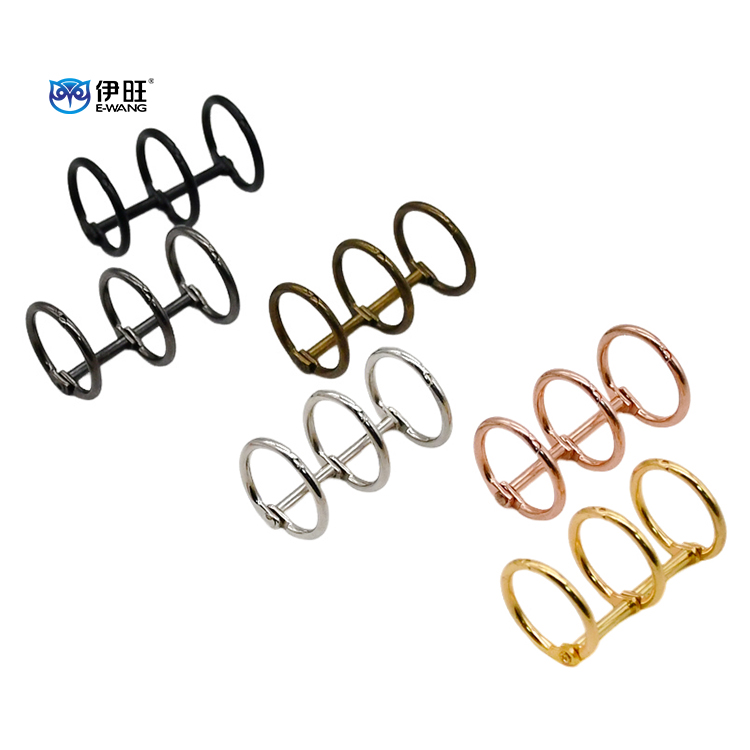
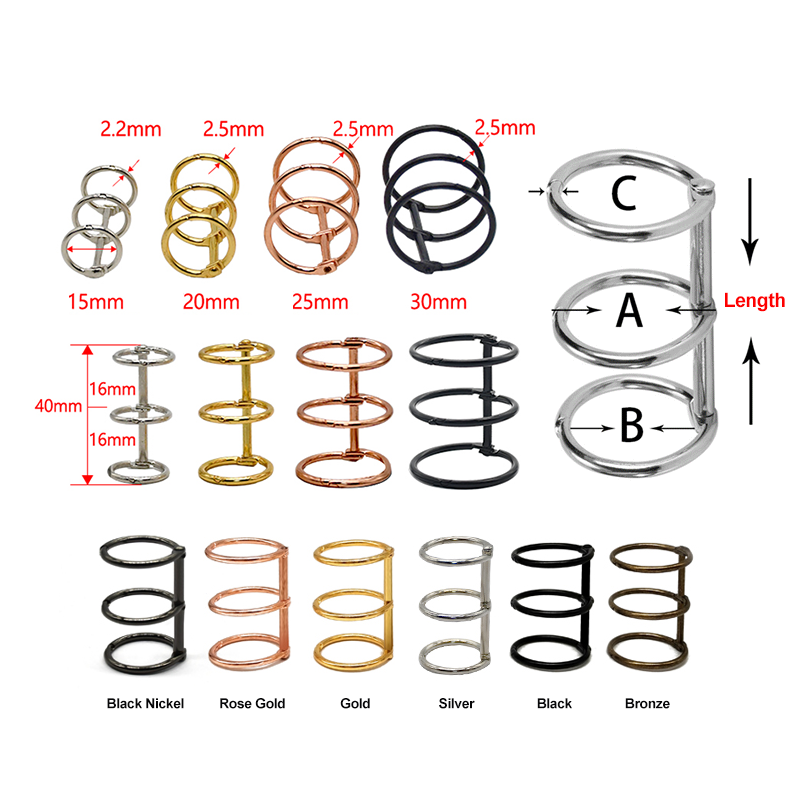
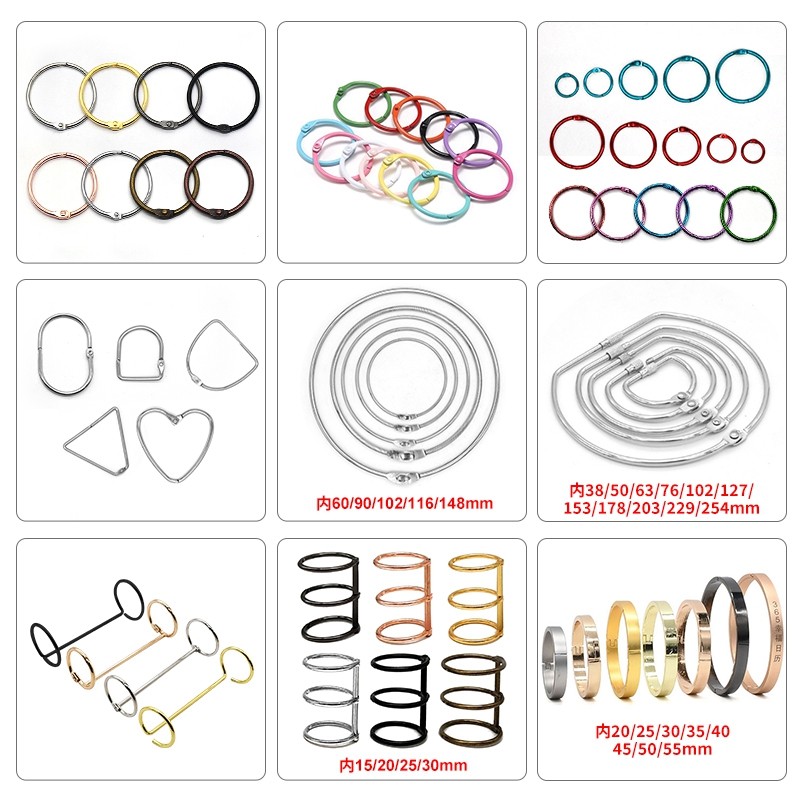
The heart of the binder features three rings typically made from steel or heavy-duty plastic. These come in various diameters (1/2-inch to 3-inch capacities) to accommodate different document volumes. The rings themselves may be circular or D-shaped, with the latter providing better page alignment. Modern mechanisms include:
- **Round rings:** The traditional design, reliable and economical
- **D-rings:** Allow pages to sit flatter and provide more capacity
- **Multi-ring systems:** For specialized applications like sheet music or legal documents
- **Locking mechanisms:** Prevent accidental opening during transport
**Cover Materials and Construction:**
From basic cardboard to premium leather, cover materials define both durability and presentation quality. Innovations include:
- **Vinyl covers:** Water-resistant and durable, available in countless colors and textures
- **Polypropylene:** Crystal clear for customizable cover inserts
- **Recycled materials:** Meeting growing demand for sustainable options
- **Reinforced edges:** Preventing wear at stress points
- **Padded covers:** Providing protection and a premium feel
**Internal Components:**
The true versatility of three-ring binders emerges from their customizable interiors:
- **Sheet protectors:** Clear sleeves that shield important documents
- **Dividers with tabs:** Creating organized sections within the binder
- **Pocket folders:** For loose materials that aren't hole-punched
- **Specialty inserts:** Including business card holders, CD sleeves, and pen loops
- **Perforated notepaper:** For easy removal of notes
## The Psychology of Organization: Why Physical Binders Still Matter
In an increasingly digital world, the continued relevance of three-ring binders speaks to fundamental human psychological needs and practical considerations:
**Tactile Learning and Memory:**
Studies in cognitive psychology suggest that physical interaction with materials enhances memory retention. The kinesthetic act of flipping through pages, adding notes in margins, and physically reorganizing content creates stronger neural connections than scrolling through digital documents. This explains why many students and professionals maintain physical binders alongside digital files.
**Visual Organization and Spatial Memory:**
The ability to see an entire project spread across a table, to physically thumb through sections, and to use color-coded dividers leverages human spatial memory systems. This physicality provides a cognitive map of information that purely digital organization often lacks.
**Reduced Digital Fatigue:**
As screen time reaches unprecedented levels, many individuals experience "digital eye strain" and cognitive overload from constant notifications and multitasking. Physical binders offer a focused, distraction-free environment for deep work and review.
**Authority and Permanence:**
There's a psychological weight to physical documents that digital files haven't entirely replicated. Important contracts, portfolios, and archival materials often carry more perceived authority in binder format than as email attachments.
**Backup and Security:**
Physical binders provide an analog backup to digital systems, immune to hacking, corruption, or accidental deletion. Many organizations maintain critical "disaster recovery" documents in binders as part of comprehensive security protocols.
## Applications Across Industries: Versatility in Action
**Education Sector:**
The three-ring binder has become synonymous with student life. Applications include:
- **Course organization:** Separate binders or sections for each subject
- **Project portfolios:** Compiling research, drafts, and final versions
- **Teacher resources:** Lesson plans, materials, and student records
- **Laboratory notebooks:** For documenting experiments and findings
- **Study guides:** Student-created compilations of course materials
**Business and Corporate Use:**
Professional applications highlight the binder's organizational sophistication:
- **Client presentations:** Creating impressive, tangible proposals
- **Training manuals:** For onboarding and continuing education
- **Standard Operating Procedures (SOPs):** Ensuring consistency in operations
- **Meeting materials:** Agendas, reports, and minutes in organized format
- **Financial records:** For audits, reports, and documentation
**Creative Fields:**
Artists and designers leverage binders for both organization and presentation:
- **Portfolios:** Physical presentations of artistic work
- **Storyboards:** For film, television, and advertising projects
- **Fabric and material samples:** Organized for easy reference
- **Design iterations:** Showing the evolution of creative projects
**Specialized Applications:**
- **Medical records:** In smaller practices or for specific patient education
- **Legal documents:** For case files and trial preparations
- **Music sheets:** With specialized multi-ring binders that lay flat
- **Culinary arts:** For recipes, menus, and food costing sheets
- **Real estate:** Property listings and client documentation
## Environmental Considerations and Sustainable Innovations
As environmental consciousness grows, the three-ring binder industry has responded with sustainable innovations:
**Material Advancements:**
- **Recycled content:** Many binders now incorporate post-consumer recycled plastics and paper products
- **Biodegradable options:** Plant-based plastics that break down more readily
- **FSC-certified paper:** For filler paper and dividers from responsibly managed forests
- **Durable designs:** Higher quality binders that last for years rather than being disposable
**Circular Economy Models:**
Forward-thinking manufacturers are implementing:
- **Take-back programs:** Allowing customers to return old binders for recycling
- **Refill systems:** Where only the interior paper needs replacement
- **Modular designs:** Where damaged components can be replaced individually
**Digital-Physical Hybrid Systems:**
Some innovators are creating smart binders with:
- **QR code integration:** Linking physical documents to digital resources
- **Digital indexing systems:** Where a table of contents syncs with cloud storage
- **Hybrid workflows:** Systems that seamlessly transition between physical and digital organization
## Customization and Personal Expression
Far from being generic office supplies, three-ring binders have become canvases for personal and corporate expression:
**Corporate Branding:**
- **Custom imprints:** Company logos, mission statements, and contact information
- **Brand color matching:** Precise color reproduction for brand consistency
- **Employee onboarding kits:** Pre-loaded with essential materials in branded binders
- **Trade show materials:** Creating cohesive, professional presentations
**Personal Customization:**
- **DIY cover art:** From drawings and collages to printed inserts
- **Thematic organization:** Using color-coded systems for different life areas
- **Memory keeping:** Transforming binders into scrapbooks and memorabilia organizers
- **Project tracking:** Visual progress indicators using customized divider systems
**Educational Personalization:**
- **Subject-specific designs:** Themed binders for different academic interests
- **Learning accommodations:** Specialized configurations for different learning needs
- **Interactive elements:** Including manipulatives, flashcards, and reference charts
## Conclusion: The Enduring Legacy of a Simple Design
The three-ring binder represents that rare convergence of form, function, and adaptability. What began as a simple solution to paper organization has evolved into a sophisticated tool that bridges physical and digital worlds, supports complex organizational needs, and adapts to changing environmental and technological landscapes.