The Ultimate Guide to Chicago Screws: Bookbinding, Leather Craft & Industrial Binding
# The Ultimate Guide to Chicago Screws: Bookbinding, Leather Craft & Industrial Binding
## Introduction
In the world of binding and fastening, there is a quiet workhorse that combines the permanence of a rivet with the flexibility of a screw. Whether you are an archivist preserving legal ledgers, a leather crafter making a custom wallet, or a restaurant owner updating a wine list, you have likely held one of these devices in your hand: the **Chicago Screw**.
Also known as **binding posts**, **screw posts**, or **ledger screws**, Chicago screws are two-piece fasteners that offer a unique advantage over traditional binding methods. They are reusable, adjustable, and incredibly strong. Unlike glue or stitching, which are permanent, or spiral coils, which can deform, Chicago screws allow you to add, remove, or rearrange pages without damaging the material.
This comprehensive guide will cover everything you need to know about Chicago screws. We will explore their history, mechanical advantages, material variations, and step-by-step applications for bookbinding and leather crafting.
## What is a Chicago Screw? (The Anatomy)
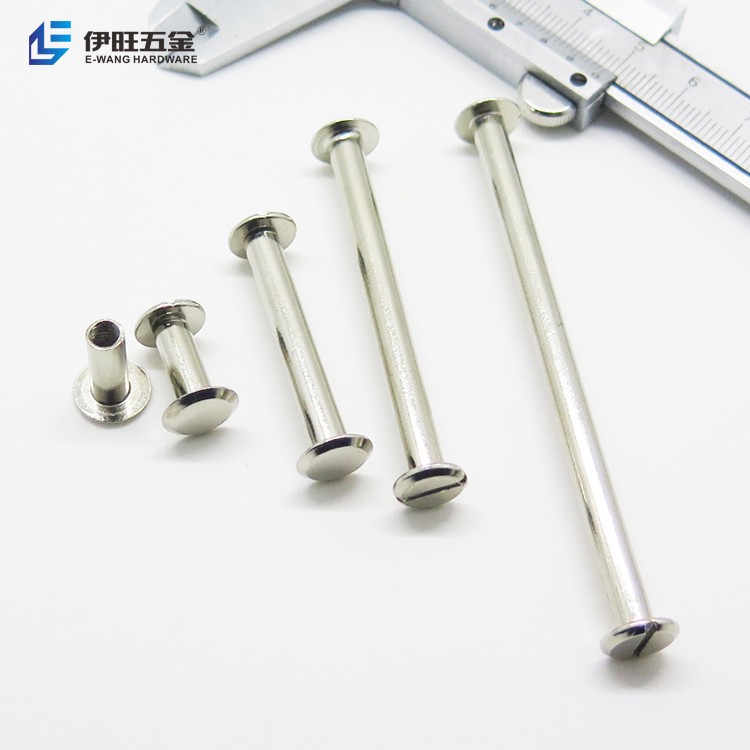
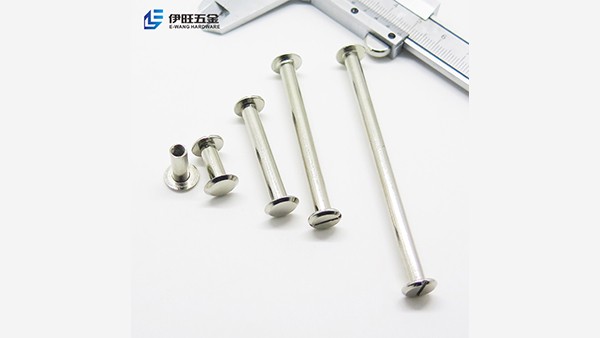
A Chicago screw is technically a "sex bolt" or "binding barrel." Unlike a standard screw that threads into a blind hole or nut, a Chicago screw consists of two distinct parts:
1. **The Male Screw (Post):** This component features a machine-cut thread on its shaft and a head (usually flat, domed, or countersunk).
2. **The Female Receptacle (Barrel):** This is a hollow cylinder with internal threads. It has a head that matches the aesthetic of the male screw.
**How it works:** You create a hole in your material, insert the female barrel from one side, and drive the male screw through from the other. The two pieces meet inside the stack of paper or leather, clamping the material between the two heads. The result is a flush, professional finish that lies flat .
## History: Why "Chicago"?
The origin of the name "Chicago screw" is rooted in industrial history. During the late 19th and early 20th centuries, Chicago was a booming hub for manufacturing, meatpacking, and—crucially—**bookbinding**. Ledger books used for accounting and inventory tracking required a binding that could withstand daily abuse but also allow for the insertion of new financial records.
Traditional glued spines could not handle the thickness or the need for updating. Staples rusted and paperclips tore pages. Chicago screws became the standard solution for these heavy-duty ledgers, earning them the nickname "Ledger Screws" . Today, while the technology remains the same, their use has expanded far beyond accounting firms.
---
## Why Choose Chicago Screws? (Advantages & Use Cases)
When deciding on a binding method, it helps to compare Chicago screws to alternatives like spiral binding, Perfect binding (glue), or rivets.
### 1. Reusability & Sustainability
In an era of sustainability, Chicago screws are a "green" choice. If a document gets torn, you don't trash the whole book. You simply unscrew the posts, replace the page, and reassemble. This makes them ideal for **swatch books, price lists, and architectural plans** .
### 2. Strength & Security
Chicago screws are made of metal (steel, brass, or aluminum). They offer shear strength comparable to a solid rivet. However, unlike a rivet, they are non-destructive to remove. For applications requiring high security (like legal documents or gun holsters), the metal-to-metal lock provides tamper resistance .
### 3. The "Lay-Flat" Ability
Nothing is more frustrating than a book that snaps shut on your hands. Chicago screws allow a book to open 360 degrees or lay completely flat on a desk. This is critical for sheet music, cookbooks, and reference manuals.
### 4. No Special Tools Required
Unlike spiral binding or saddle stitching, you do not need a $10,000 machine to use Chicago screws. A drill or hole punch and a screwdriver are usually sufficient .
### Common Applications:
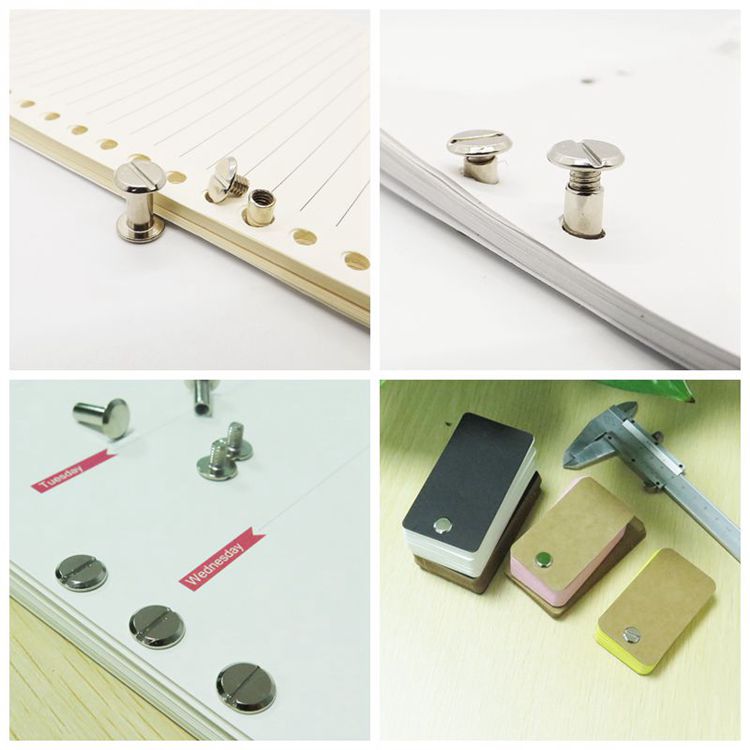
- **Bookbinding:** Custom journals, guest books, photo albums, and corporate reports.
- **Leather Craft:** Belts, dog collars, wallets, holsters (where they are often called "Chicago screws leather" or "belt screws").
- **Business:** Menu covers, presentation folders, and legal briefs .
### Stainless Steel
- **Best for:** Industrial use, outdoor gear, heavy-duty ledgers.
- **Pros:** Maximum strength. Rust-proof. High resistance to heat and chemicals.
- **Cons:** More expensive. Harder to cut or modify .
### Finishes & Colors
Beyond raw metal, Chicago screws come in various finishes to match your hardware:
- **Antique Brass / Gunmetal:** Popular in leather crafting for a rugged look .
- **Black Oxide:** Sleek, modern finish for portfolios or tech binders .
- **Rose Gold / Rainbow:** Decorative options for DIY crafts and scrapbooking .
## Sizing and Measurement Guide
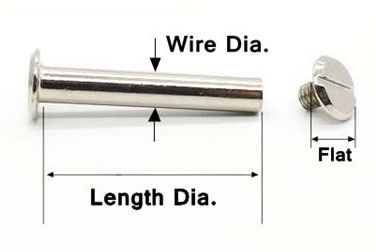
Selecting the correct size is the most critical step. Chicago screws are defined by three dimensions: **Diameter, Length (Reach), and Head Size.**
### 1. Diameter (Gauge)
This refers to the thickness of the post. Common sizes include #4, #6, and #8, or metric equivalents like M4 or M5.
- **#4 (approx 3mm):** Very thin booklets or small leather goods (watch straps).
- **#6 (approx 3.5mm):** Standard journals, photo albums, medium thickness.
- **#8 (approx 4mm - 5mm):** Heavy ledgers, thick leather holsters, large scrapbooks .
### 2. Length (The "Stack" Height)
This is the distance between the inside of the two heads.
**The Golden Rule:** The screw length *must* equal the exact thickness of your material.
- **Too short:** The threads won't engage, or the screw will bind.
- **Too long:** The screw will bottom out (a "loose" feel), or the heads won't clamp the paper.
- *Tip:* For paper, measure the stack height with a caliper. For leather, remember that leather compresses. Choose a length slightly shorter than the uncompressed thickness .
## DIY Guide: How to Bind a Book with Chicago Screws
You don't need a print shop to create professional-looking books. Here is a step-by-step guide to using binding posts.
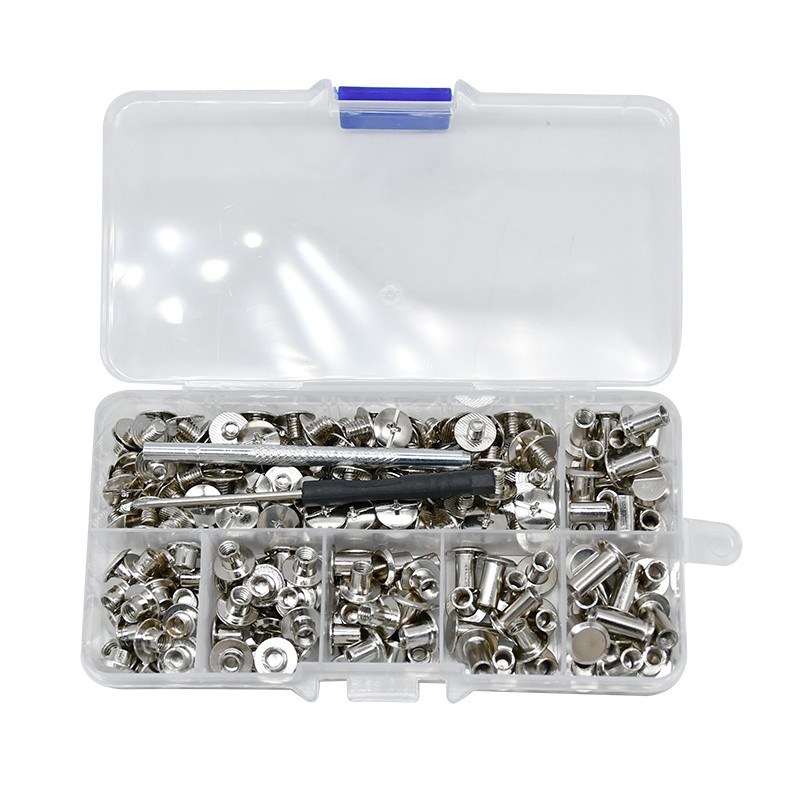
### Tools Required:
- Chicago screws (sized to your document thickness).
- Drill press or handheld drill (for thick paper/leather) or a heavy-duty hole punch (for thin paper).
- Awl (for marking holes).
- Ruler.
- Screwdriver (flathead or Phillips, matching your screw type).
### Step 1: Prepare Your Content
Align your pages perfectly. Use binder clips to hold the stack in place so it doesn't shift.
### Step 2: Mark the Holes
Decide how many screws you need. For an 8.5" x 11" document, two screws are usually insufficient; use three or four.
- **Standard placement:** 0.5 inches from the spine edge.
- **Spacing:** Divide the length of the spine by the number of screws plus one. Mark the positions on a scrap piece of paper first to test alignment .
### Step 3: Punch or Drill the Holes
- **For Paper:** Use a paper drill (best) or a sharp hollow punch. Standard hole punches for 3-ring binders work, but ensure the holes are clean.
- **For Leather:** Use a rotary punch or a drill press with a sharp bit. Leather requires precise cuts to avoid tearing .
- **Hole Size:** The hole should be just slightly larger than the diameter of the post. A 1/4-inch hole is standard for most #8 screws .
## Chicago Screws vs. Rivets: A Critical Comparison
If you are working with leather, you might wonder, "Should I use a rivet or a Chicago screw?"
**Chicago Screws:**
- **Pros:** Reusable. Adjustable tension. Easier to install (screwdriver vs. anvil/hammer).
- **Cons:** Can vibrate loose over time (solved with thread-locker fluid).
- **Verdict:** Use Chicago screws for **straps that need adjusting** or **items you may need to repair** (like a high-end handbag). Use rivets for items that are disposable or where vibration is constant (like a saddle cinch) .
## Conclusion
The Chicago screw is a testament to functional design. It has survived for over a century not because it is flashy, but because it works. Whether you are building a leather-bound journal meant to last a lifetime or a corporate proposal that needs to be updated monthly, binding posts offer the perfect balance of security and flexibility.
By understanding the nuances of material (brass vs. steel), sizing (the "stack height" rule), and installation torque, you can elevate your projects from amateur stapling to professional-grade binding.
**Ready to start your project?** Ensure you measure your stack height twice, buy high-quality metal screws (look for stainless or brass), and create a product that can be updated, repaired, and loved for decades.