The Ultimate Guide to Loose Leaf Binder Rings: Types, Uses, and How to Choose the Perfect Ring
In a world increasingly dominated by digital clutter, there is a powerful resurgence in the art of analog organization. From bullet journaling enthusiasts to industrial manufacturers, the need for flexible, durable, and customizable binding solutions has never been greater. At the heart of this organizational renaissance lies a simple yet incredibly versatile tool: the **loose leaf binder ring**.
Often overlooked as a mere office supply, the binder ring is a powerhouse of utility. Whether you are a crafter looking to create a perpetual calendar, a business owner compiling a professional presentation, or an engineer organizing technical manuals, understanding the nuances of loose leaf binder rings is essential.
This comprehensive guide explores everything you need to know about binder rings. We will delve into the different types, materials, sizes, and industrial applications to help you make the best choice for your specific needs.
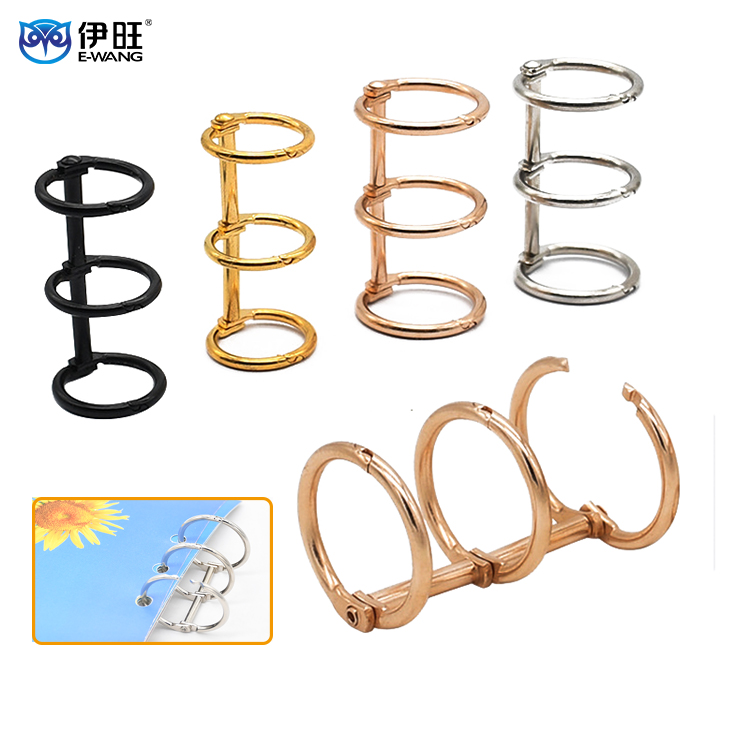
## What Are Loose Leaf Binder Rings?
At its core, a loose leaf binder ring is a circular or D-shaped fastening mechanism designed to hold punched paper or other materials together. Unlike a traditional bound notebook or a fixed three-ring binder, these rings are "loose," meaning they can be opened and closed repeatedly, allowing for the addition, removal, or rearrangement of pages without damaging them.
The concept dates back to the invention of the two-ring binder in the late 19th century, but the modern loose leaf ring has evolved into a standardized system used globally. The "loose leaf" terminology refers to the paper itself—sheets that are manufactured with pre-punched holes, ready to be secured.
### Why Choose Binder Rings Over Traditional Binders?
While the standard three-ring binder is a staple in offices, binder rings offer distinct advantages:
1. **Aesthetics:** Binder rings offer a sleek, minimalist look. They are often used in leather portfolios or DIY projects where a bulky plastic or vinyl binder would ruin the aesthetic.
2. **Capacity Flexibility:** You are not locked into a fixed spine width. You can add as many rings as needed to accommodate a growing project.
3. **Lay-Flat Capability:** High-quality rings, particularly D-shaped ones, allow the covers to fold back completely or lay flat on a desk, which is essential for writing or working while referencing the material.
4. **Customization:** They allow for mixed media. You can combine different paper types, tabs, pockets, and even fabric swatches in one cohesive set.
## Types of Loose Leaf Binder Rings
Not all binder rings are created equal. To optimize your purchase for SEO and practical use, it is vital to understand the taxonomy of the product. Generally, they are categorized by shape and opening mechanism.
### 1. By Shape: O-Rings vs. D-Rings
The shape of the ring dictates the capacity and the user experience.
- **O-Rings (Round Rings):**
- **Description:** These are the classic, circular rings.
- **Pros:** They are generally the most economical option. They provide 360-degree rotation of pages, which is preferred for planners that need to flip over completely (like a flip-style calendar).
- **Cons:** When the binder is full, pages located at the "bottom" of the ring (the side opposite the spine) can stack unevenly, sometimes causing the cover to close unevenly. Large O-rings can feel bulky in the hand.
- **D-Rings (D-Shaped Rings):**
- **Description:** As the name suggests, these rings are shaped like the letter "D." The straight edge is mounted to the spine of the binder.
- **Pros:** D-rings are superior for high-capacity organization. Because the straight edge is fixed to the spine, they hold more paper than O-rings of the same diameter without increasing the binder width. The pages stack neatly in a uniform pile, allowing the binder to close flush and lay flat.
- **Cons:** Slightly more expensive than O-rings. They are designed primarily for spine-mounted binders rather than loose individual rings.
### 2. By Mechanism: Snap Rings vs. Booster Rings
Understanding the opening mechanism is crucial for durability.
- **Snap Rings:**
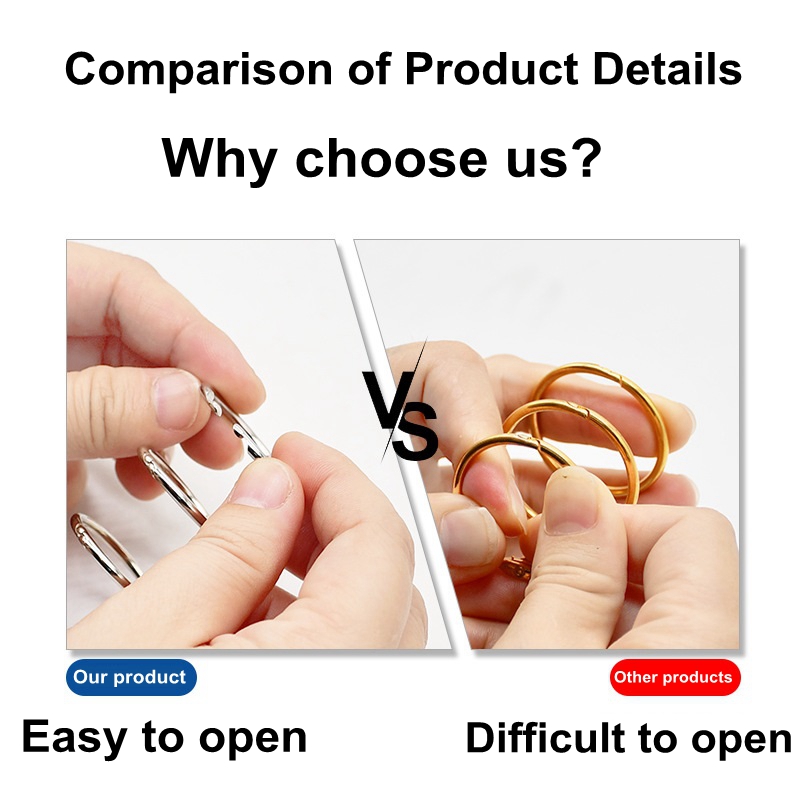
- **Description:** These are the standard rings found on most loose leaf binders. They consist of two halves that snap together when closed.
- **Usage:** Ideal for standard office binders, photo albums, and scrapbooks.
- **Durability:** Good for frequent use, though the metal levers can sometimes break if bent too far.
- **Booster Rings (or Clip Rings):**
- **Description:** These feature a scissor-like trigger or lever that opens both halves of the ring simultaneously.
- **Usage:** Preferred for high-volume ring binders or binders that are opened and closed frequently (such as sales presentation books).
- **Durability:** Excellent. The mechanical advantage of the lever reduces stress on the metal, ensuring a longer lifespan.
### 3. By Application: Loose Ring Posts (Post Binders)
It is important to distinguish between "rings" and "posts." While they serve a similar organizational purpose, **loose ring posts** (often called screw posts or Chicago screws) are a different category.
- **Loose Ring Posts:** These are permanent or semi-permanent binding posts that require a screwdriver to open. They do not have a lever mechanism.
- **Loose Leaf Binder Rings:** These are tool-free. They utilize a spring-loaded lever or a simple snap closure for easy, repeatable access.
## Material Matters: Metal vs. Plastic
The material of your loose leaf binder rings significantly impacts the product's weight, durability, and aesthetic appeal.
### Metal Binder Rings
Metal is the industry standard for durability. Within this category, there are several sub-materials:
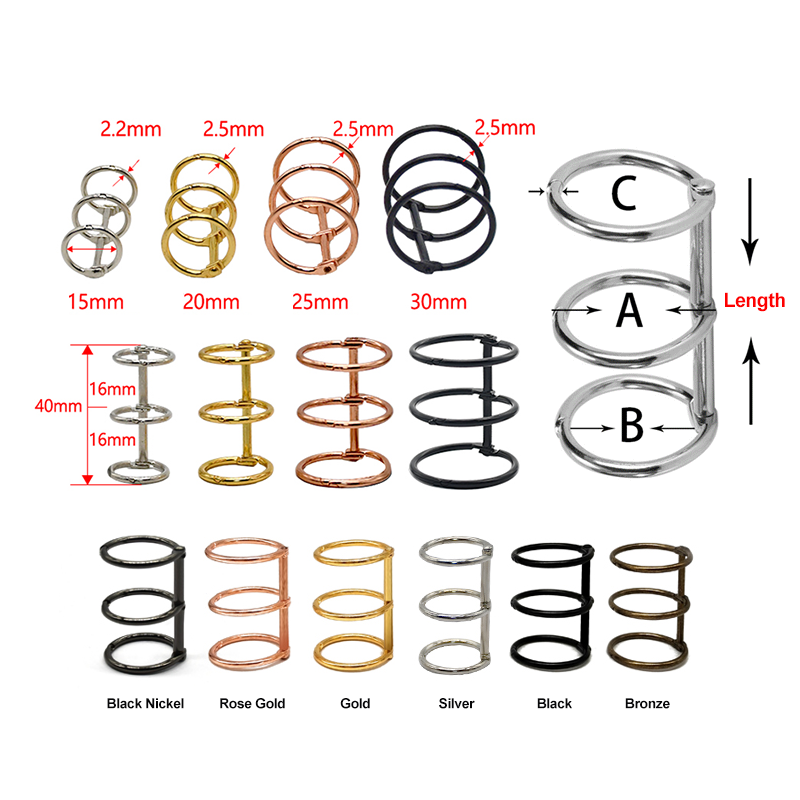
- **Steel:** The most durable option. Steel rings are resistant to bending and can hold heavy loads without warping. They are often nickel or chrome-plated to resist rust.
- **Aluminum:** Lighter than steel but still sturdy. Aluminum rings are popular in high-end leather binders because they reduce the overall weight of the portfolio.
- **Brass:** Often used for decorative purposes or vintage-style binders. Brass is heavy and durable but can tarnish over time unless lacquered.
**Pros:** High tensile strength, professional appearance, long lifespan.
**Cons:** Heavier than plastic, can be cold to the touch, potential for rust if the coating is damaged.
## Key Applications and Use Cases
Understanding the end-use of your binder rings can help you optimize your product listings and content.
### 1. Professional Office Environments
In corporate settings, loose leaf binder rings are used for **presentation books, sales proposals, and technical manuals**. Companies often opt for **custom logo embossing** on leather binders with high-quality **nickel-plated D-rings**. The ability to swap out pages easily allows sales teams to update pricing sheets without reprinting entire documents.
### 2. Education and Students
Students rely on binder rings to organize subjects. The trend of **modular note-taking** has grown, where students use a single set of rings to combine notes from different classes, removing outdated material at the end of the semester to reuse the binder.
### 3. Crafting and Scrapbooking
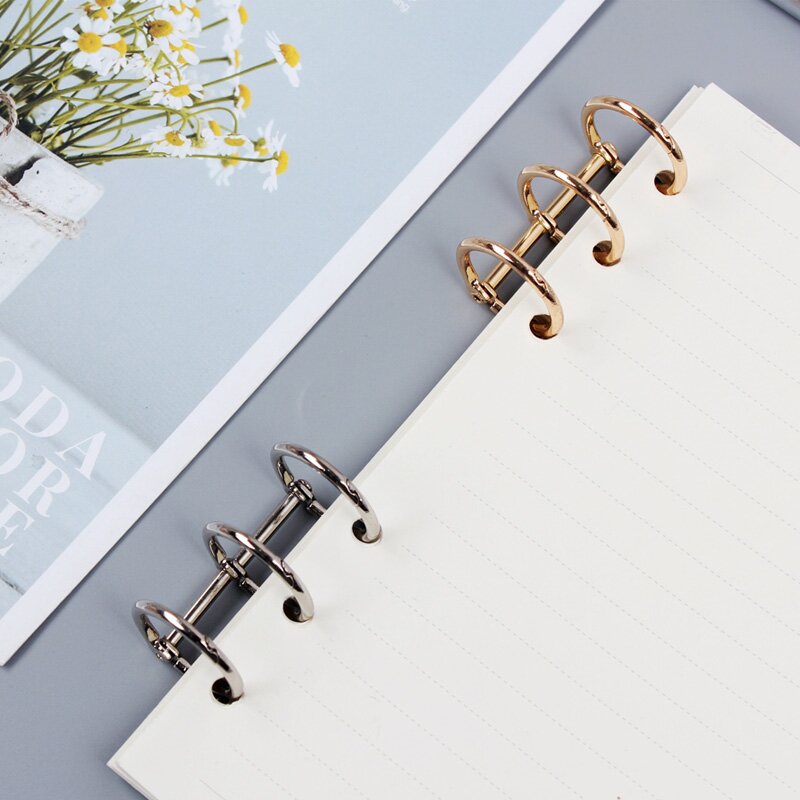
The crafting community has embraced binder rings for **mini albums, smash books, and memory keeping**. In this niche, **loose leaf binder rings for crafts** are often sold in vintage brass or colorful plastic. Crafters appreciate that rings allow them to incorporate non-paper items, such as fabric, acetate, or thick cardboard, which standard spiral binding cannot accommodate.
### 4. Industrial and Manufacturing
In industrial settings, binder rings are used for **safety data sheet (SDS) binders, equipment maintenance logs, and shop manuals**. These environments require heavy-duty steel rings that can withstand dust, oil, and frequent handling. **Booster rings** are the preferred choice here due to their robust lever mechanisms.
### 5. Home Organization
From **recipe binders** to **household management notebooks**, consumers use loose leaf binder rings to keep their homes organized. The waterproof plastic covers and durable rings allow these binders to sit on kitchen counters without damage.
## Conclusion
The loose leaf binder ring is a testament to the idea that good design never goes out of style. It offers the perfect balance of security and flexibility, making it indispensable for students, professionals, crafters, and industrial workers alike.
Whether you are looking for the industrial strength of a **2-inch steel D-ring** to hold a 500-page manual, or the aesthetic charm of a **brass snap ring** for a handmade leather journal, the choice ultimately depends on your specific needs regarding capacity, frequency of use, and visual style.