The Ultimate Guide to Split Keyrings: History, Mechanics, and Industrial Applications
The Ultimate Guide to Split Keyrings: History, Mechanics, and Industrial Applications
## Introduction: The Humble Hero of Organization
In the vast ecosystem of hardware and accessories, few items are as universally used yet rarely understood as the split keyring. It is the silent sentinel that holds our digital lives (USB drives), our transportation (car keys), our security (house keys), and our identity (key fobs) together in a neat, portable bundle. Despite its ubiquity, the split keyring—often mistakenly called a “keychain”—is a marvel of metallurgical engineering and mechanical design.
For the average consumer, it is simply a circle of metal that holds keys. For manufacturers, industrial buyers, and outdoor enthusiasts, however, the split keyring represents a critical point of failure or success. The wrong ring can lead to lost keys, damaged electronics, or even failed safety equipment in industrial settings.
This comprehensive guide delves deep into the world of the split keyring. We will explore its history, the intricate physics behind its simple design, the various materials and manufacturing processes, and the diverse applications that range from everyday carry (EDC) to heavy-duty industrial use. Whether you are a wholesaler looking to understand inventory, a manufacturer seeking quality standards, or a consumer looking for the most durable option, this guide is your definitive resource.
## Chapter 1: The Anatomy of a Split Keyring
Before we explore the variations, it is essential to understand the core anatomy of the split keyring. While it looks like a simple coil, it is a precision-engineered piece of hardware.
### 1.1 The Coil
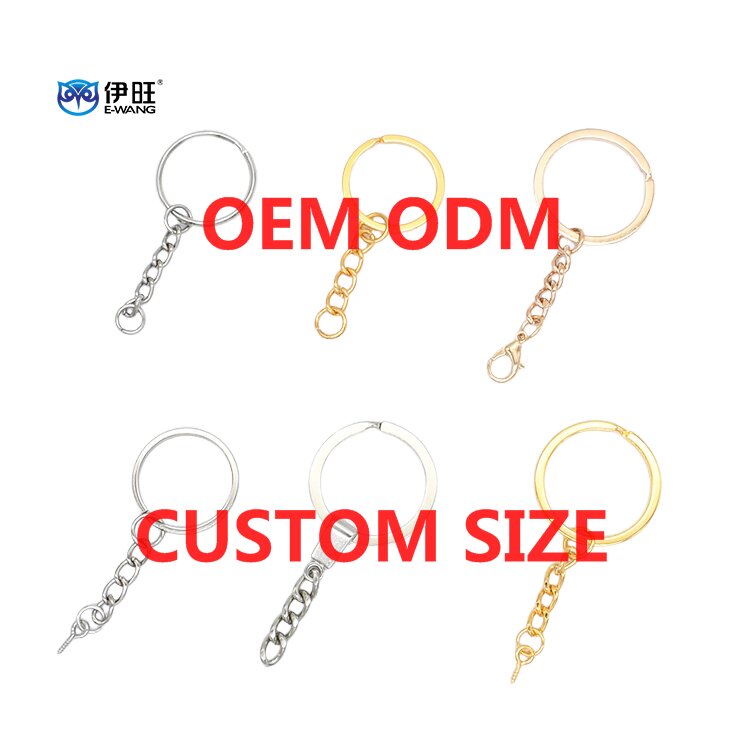
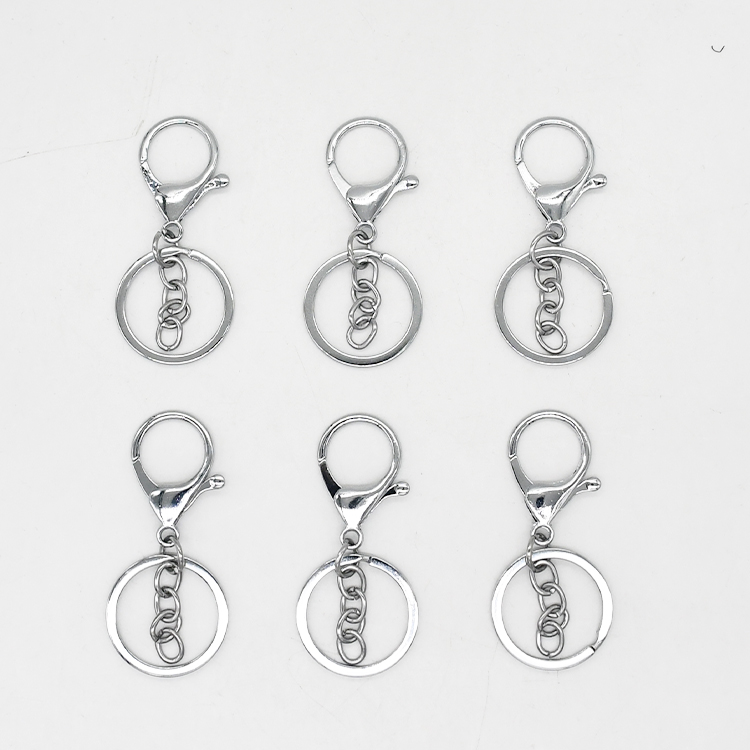
The defining characteristic of a split keyring is its dual-layer, coiled construction. Unlike a solid ring (like a welded jump ring), the split keyring consists of two concentric circles of wire that are wound tightly together. The "split" refers to the gap between the two layers. This gap is not a defect; it is the functional entry point for keys.
### 1.2 The Wire
The wire used is typically round in cross-section. The diameter of this wire (gauge) determines the ring’s strength and flexibility. Thicker wire (lower gauge number) offers higher tensile strength but is harder to manipulate. Thinner wire allows for easier insertion of keys but is prone to bending or breaking under heavy loads.
### 1.3 The Working Mechanism
The mechanism relies on torsional spring force. The inner coil and outer coil are under tension. When you pry open the gap, you are essentially working against the natural memory of the metal. The metal wants to return to its original, closed state. This constant pressure ensures that keys, once slid between the coils, are held securely without the need for a locking clasp.
## Chapter 2: A Brief History of Key Organization
To appreciate the split keyring, we must look at the evolution of how we carry keys.
### 2.1 The Pre-Ring Era
Before the 20th century, keys were large, heavy, and few. They were often carried on ribbons, string, or simple leather thongs. In medieval times, chatelaines—decorative belt hooks or clips—were used by housekeepers and nobles to hang keys, scissors, and watches. These were functional but cumbersome.
### 2.2 The Industrial Revolution and Mass Production
With the advent of the Industrial Revolution, the mass production of smaller, standardized locks (like the Yale pin-tumbler lock) made keys smaller and more numerous. People suddenly had keys for the front door, back door, shed, office, and safe. There was a need for consolidation.
### 2.3 The Invention of the Split Ring
The exact origin of the split keyring is debated, but it is widely attributed to Samuel Harrison, who patented a "key ring" in the late 19th century. However, the modern coiled split ring became popular in the early 20th century. It was a radical departure from solid rings or clasps. The split ring offered redundancy—if one coil failed, the other often held—and security, as keys could not simply slide off an open clasp. By the 1950s, the split keyring had become the global standard.
---
## Chapter 3: Materials Science – The Soul of the Ring
The performance of a split keyring is dictated entirely by the material from which it is made. Selecting the right material is crucial for longevity and application fit.
### 3.1 Steel (Carbon Steel)
The vast majority of split keyrings are made from high-carbon steel.
- **Properties:** High tensile strength, excellent spring memory, cost-effective.
- **Treatment:** Most steel rings are plated to prevent rust. Common plating includes nickel, brass, or zinc.
- **Pros:** Strong, durable, holds shape well.
- **Cons:** Susceptible to corrosion if the plating wears off. Nickel plating can cause allergic reactions in some users (nickel sensitivity).
### 3.2 Stainless Steel
Stainless steel is the premium choice for durability and aesthetics.
- **Grades:** 304 (good corrosion resistance) and 316 (marine grade, excellent corrosion resistance).
- **Pros:** Superior corrosion resistance, hypoallergenic, maintains luster, extremely high tensile strength.
- **Cons:** More expensive than carbon steel. Harder to bend or open due to the material’s stiffness.
---
## Chapter 4: Manufacturing Processes – From Wire to Ring
Understanding how split keyrings are made helps differentiate between cheap, unreliable products and high-quality, durable hardware.
### 4.1 Wire Drawing
The process begins with wire drawing. A metal rod (steel, brass, etc.) is pulled through a series of dies to reduce its diameter to the desired gauge. This process work-hardens the metal, which is necessary for the spring action.
### 4.2 Coiling
The wire is fed into a specialized coiling machine. These machines wrap the wire around a mandrel (a cylindrical form) to create a helix (spring shape). The machine must precisely control the tension to ensure the inner diameter (ID) and outer diameter (OD) are concentric.
### 4.3 Cutting and Splitting
Once the coil is formed, it is cut into individual "rings" (though at this stage it looks like a tiny spring). The ends are then ground or cut to create the "split" or gap.
### 4.4 Heat Treatment (Tempering)
This is a critical step for carbon steel rings. The rings are heated to a specific temperature and then rapidly cooled (quenched). This process increases the hardness and elasticity of the steel, ensuring the ring returns to its shape after being opened. Cheap rings often skip this step, resulting in rings that deform permanently after a few uses.
### 4.5 Plating and Finishing
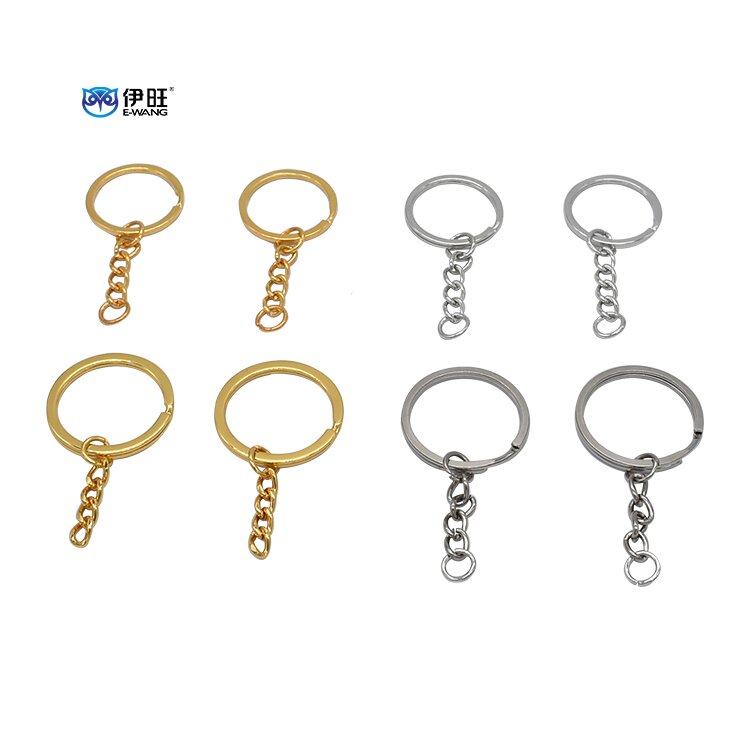
Finally, the rings are tumbled to remove burrs (sharp edges) and then plated. High-quality rings are pre-plated before tumbling to ensure the plating adheres to the inside of the coil as well, preventing rust from developing internally.
## Chapter 5: The Physics of Failure – Why Rings Break
For industrial buyers and heavy users, understanding why keyrings fail is essential to selecting the right product.
### 5.1 Fatigue Failure
Metal fatigue is the number one killer of split keyrings. Every time you open the ring to add or remove a key, you are stressing the metal. Over thousands of cycles, microscopic cracks form in the wire. Eventually, the ring snaps. High-quality steel with proper heat treatment has a much higher fatigue limit.
### 5.2 Stress Concentration
Sharp edges are a common defect. If a ring is not properly tumbled, the cut ends of the wire can have sharp, burred edges. These edges act as stress concentrators—points where force is focused. If you apply leverage to open the ring at this point, it is more likely to snap.
### 5.3 Overloading
Every ring has a working load limit (WLL). While a standard 1-inch keyring might hold 10-20 lbs theoretically, the constant dynamic load (swinging, bumping) of a heavy key set can exceed this. For large key sets (e.g., janitorial services with 50+ keys), standard rings are inadequate.
### 5.4 Corrosion
Rust is not just unsightly; it creates pits in the metal surface. These pits act as stress concentrators. Once corrosion begins, the structural integrity degrades rapidly.
## Conclusion: More Than Just a Circle of Metal
The split keyring is a testament to functional design. In an age where we often over-engineer simple solutions, the split ring has remained largely unchanged for over a century because it works. It is a perfect balance of tension, strength, and accessibility.
For the consumer, understanding the nuances of gauge, material, and manufacturing can save the frustration of lost keys. For the business or industrial buyer, selecting the correct split keyring is an exercise in risk management—a small investment that protects valuable assets.
Whether you are looking for a simple nickel ring for your house key, a rugged titanium ring for your outdoor gear, or bulk stainless steel rings for a property management portfolio, the key to success lies in informed selection. Choose wisely, maintain diligently, and this humble hardware hero will serve you reliably for years to come.