Stainless Steel Keyrings: The Ultimate Guide to Durability, Style, and Everyday Utility
Introduction: The Unsung Hero of Everyday Carry
Every day, millions of people reach into their pockets, bags, or purses to retrieve a small but essential object—the keyring. Often overlooked, this humble accessory holds the keys to our homes, cars, offices, and countless other aspects of our lives. While keyrings come in many materials—plastic, aluminum, brass, leather, and even titanium—one material stands out for its exceptional balance of strength, corrosion resistance, affordability, and aesthetic appeal: **stainless steel**.
In this comprehensive guide, we will explore everything you need to know about stainless steel keyrings. From material science to manufacturing processes, from design varieties to practical applications, and from maintenance tips to sustainability—this article will help you understand why stainless steel keyrings are the gold standard of everyday carry (EDC) accessories.
## Chapter 1: Why Stainless Steel? The Material Science Behind the Strength
### What Is Stainless Steel?
Stainless steel is an iron-based alloy that contains a minimum of 10.5% chromium. The chromium forms a passive layer of chromium oxide on the surface, which prevents rust and corrosion. Additional elements like nickel, molybdenum, and titanium can be added to enhance specific properties such as hardness, ductility, or resistance to acids.
## Chapter 2: Types of Stainless Steel Keyrings – Find Your Perfect Match
Not all keyrings are created equal. Depending on your lifestyle, profession, or aesthetic preference, different designs offer unique advantages.
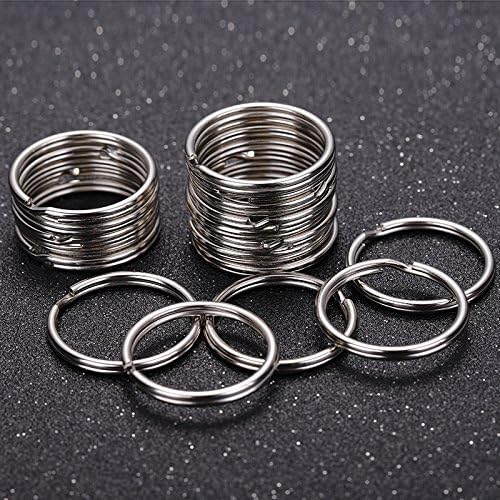
### 1. Classic Split Ring Keyrings
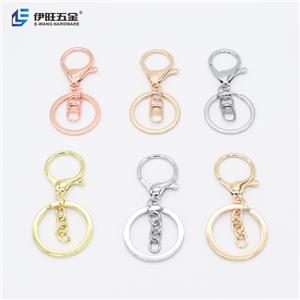
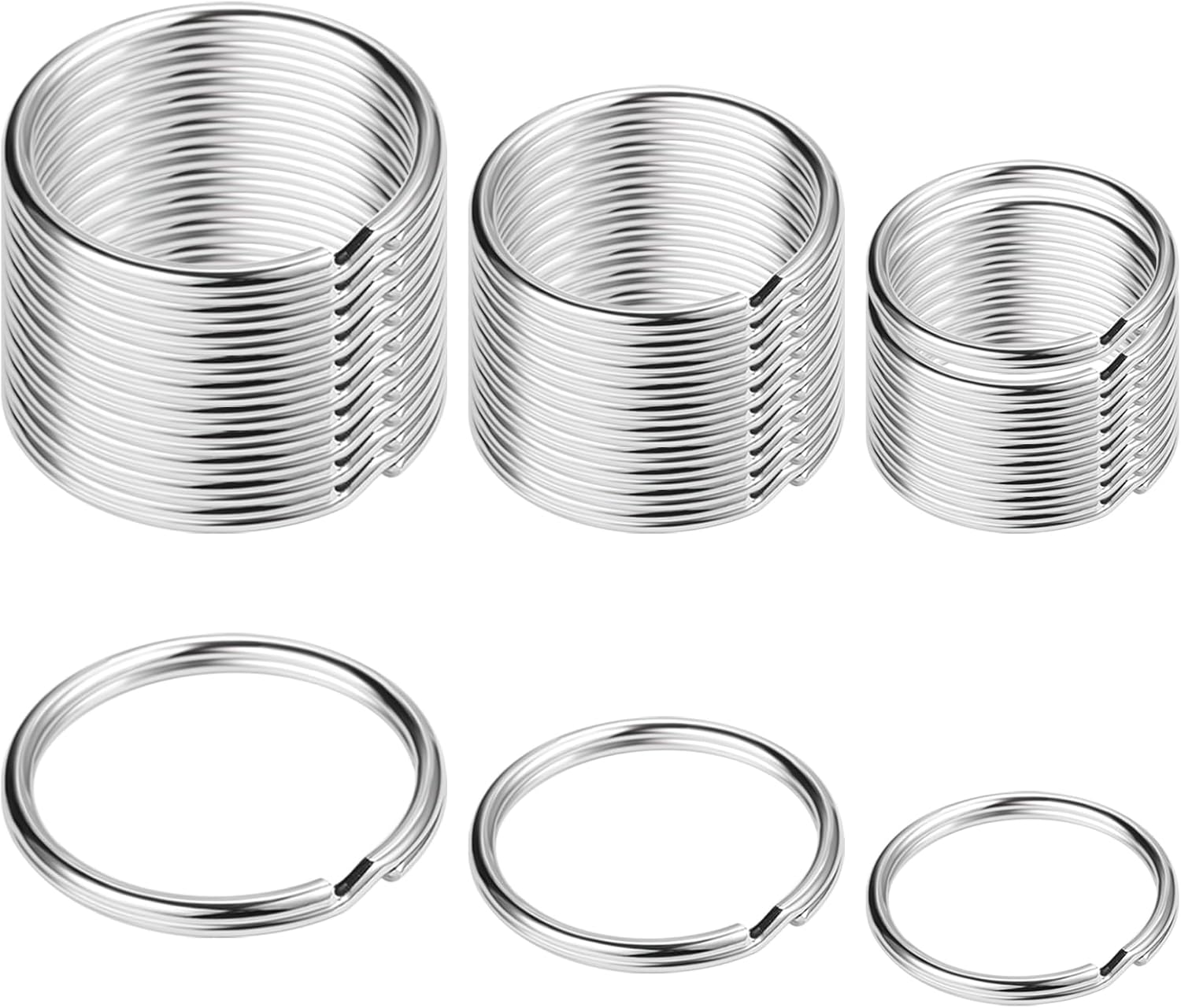
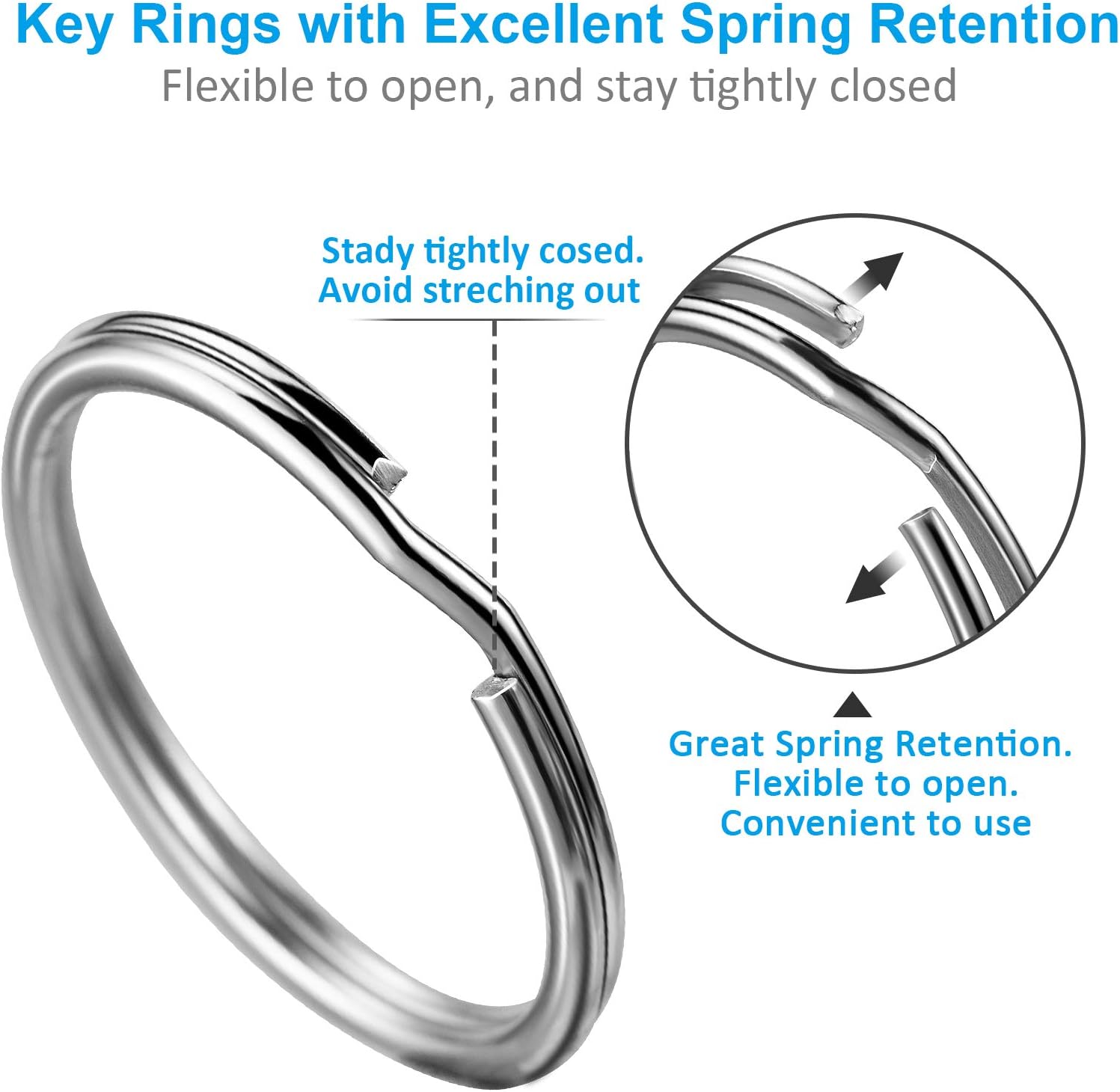
The most traditional design—a double-coiled spring-like ring. To add a key, you pry open the coil and slide the key onto the inner coil.
**Advantages:**
- Extremely secure (keys won't fall off)
- Simple and reliable
- Very low profile
**Disadvantages:**
- Can be difficult for people with long nails or arthritis
- Scratches keys during insertion/removal
**Best for:** Everyday keys, minimalists, traditionalists.
### 2. Solid Brass Core with Stainless Steel Shell
Some premium keyrings combine a stainless steel exterior with a brass or aluminum core. This offers the look and strength of steel with easier key insertion.
### 3. Screw-Together or Bolt Keyrings
Two stainless steel bars or plates held together by small screws. Keys slide onto the post, then the top plate is screwed down.
**Advantages:**
- No prying or bending
- Easy to add/remove keys
- Clean, modern look
**Disadvantages:**
- Screws can loosen over time (use threadlocker)
- Slightly bulkier
**Best for:** People who frequently change keys, EDC enthusiasts.
### 4. Carabiner-Style Keyrings
A spring-loaded gate mechanism allows the keyring to clip onto belt loops, bags, or D-rings. Often made from stamped or wire-formed stainless steel.
**Advantages:**
- Quick attachment/detachment
- Multi-functional (can hold small tools)
- Great for outdoor use
**Disadvantages:**
- Gate springs can wear out after years
- Larger size
**Best for:** Hikers, construction workers, anyone who wants keys accessible outside a pocket.
### 5. Key Bar or Key Organizer Systems
A modern evolution: multiple stainless steel plates sandwich keys between them, using a central screw or magnetic system. Keys fan out like a pocketknife.
**Advantages:**
- Silent (no jingling)
- Compact and flat
- Prevents keys from poking through pockets
**Disadvantages:**
- Expensive
- Limited capacity (typically 6–10 keys)
- Requires proprietary parts
**Best for:** Professionals, urban EDC users, gift buyers.
### 6. Keychain Bottle Openers
A hybrid product: a stainless steel keyring integrated with a bottle opener edge. Often shaped like a flat bar or a circle with a notch.
**Advantages:**
- Two functions in one
- Great conversation starter
- Very durable
**Disadvantages:**
- Slightly heavier
- Not ideal for minimalist key sets
**Best for:** Social settings, craft beer lovers, promotional giveaways.
### 7. LED Light Keyrings
A small stainless steel capsule containing an LED light, powered by button batteries. The keyring loop is integrated into the body.
**Advantages:**
- Emergency light always with you
- Slim and lightweight
**Disadvantages:**
- Batteries need replacement
- Low lumen output (usually 5–20 lumens)
**Best for:** Night workers, safety-conscious users.
## Chapter 3: Manufacturing Processes – From Raw Steel to Finished Product
Understanding how stainless steel keyrings are made helps you appreciate their quality and price differences.
### Method 1: Stamping (Progressive Die Stamping)
A flat sheet of stainless steel is fed through a press with a series of dies. The process cuts, bends, and forms the keyring shape in seconds.
**Pros:** High volume, low cost, consistent dimensions.
**Cons:** Limited to 2D or simple 3D shapes; edges may be sharp if not deburred.
**Used for:** Flat keyrings, carabiners, bottle openers.
### Method 2: Wire Forming
Stainless steel wire (typically 2–4 mm diameter) is fed into a CNC wire bender. The machine bends the wire into split rings, D-rings, or custom shapes.
**Pros:** Strong grain flow, smooth surface, no welding required for rings.
**Cons:** Slower than stamping; limited to wire-like profiles.
**Used for:** Split rings, jump rings, chain links.
### Method 3: Casting (Investment or Die Casting)
Molten stainless steel is poured into a ceramic or metal mold. After cooling, the part is polished and finished.
**Pros:** Complex 3D shapes possible (logos, textures).
**Cons:** Porosity risk; higher cost; requires post-machining.
**Used for:** Decorative keyrings, custom logo keychains.
## Chapter 4: Practical Benefits – Why You Should Switch to Stainless Steel
If you’re still using a plastic or cheap metal keyring, here are compelling reasons to upgrade.
### 1. Unmatched Durability
Stainless steel has a tensile strength of 500–750 MPa (for 304 grade). A 3 mm thick keyring can easily hold over 50 kg (110 lbs) without deforming. In contrast, aluminum keyrings can bend, and zinc alloy ones can snap.
### 2. No Rust, Ever (If You Choose the Right Grade)
Cheap “metal” keyrings are often iron or low-carbon steel with a thin nickel plating. Once the plating wears off (usually within months), rust begins. Stainless steel’s chromium oxide layer is self-healing. Even if scratched, the exposed steel immediately re-passivates.
### 3. Hypoallergenic Options
Many people develop contact dermatitis from nickel. While 304 contains 8-10.5% nickel, the nickel is chemically bound and rarely causes reactions. For truly sensitive individuals, choose **316 stainless steel** (lower nickel release) or **430** (no nickel, but magnetic and less corrosion-resistant). Some manufacturers also offer **nickel-free stainless steel** (e.g., 204Cu).
### 4. Environmentally Friendly
Stainless steel is 100% recyclable. The global recycling rate for stainless steel is over 90%. By buying a stainless steel keyring, you are choosing a product that can be melted down and remade infinitely without degradation. Compare that to plastic keyrings that end up in landfills or oceans.
### 5. Professional Appearance
A brushed or polished stainless steel keyring looks clean, modern, and professional. It doesn’t flake, discolor, or rub off onto your clothes. Whether you’re a real estate agent, a facilities manager, or a car enthusiast, your keyring reflects your attention to detail.
### 6. Security
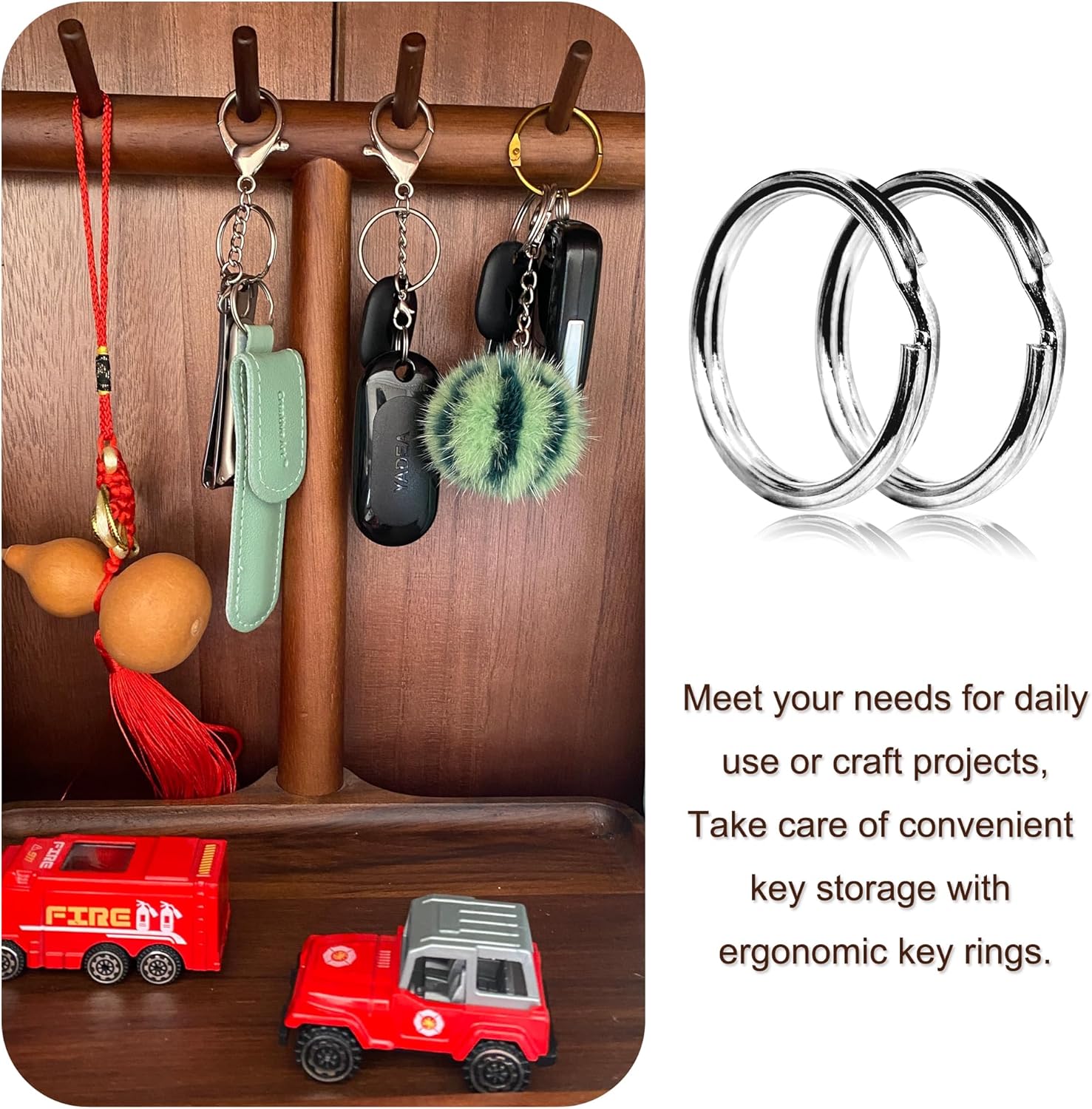
Cheap keyrings can fail at the worst moment—dropping all your keys in a parking lot or losing a car key worth hundreds of dollars. Stainless steel’s fatigue resistance means it withstands thousands of open-close cycles. The split ring design, in particular, has no moving parts to fail.
## Conclusion: Small Investment, Daily Returns
A stainless steel keyring costs between $5 and $30 – less than a single lunch or a coffee subscription for a week. Yet you will interact with it multiple times every day for years, often for a decade or more. It holds not just metal keys, but access to your home, your vehicle, your livelihood.
Choosing stainless steel means choosing **reliability** over frustration, **style** over mediocrity, and **sustainability** over disposability. Whether you prefer the timeless simplicity of a split ring, the modern precision of a key organizer, or the utility of a carabiner, there is a stainless steel keyring perfectly suited to your life.