The Ultimate Guide to Stainless Steel Wire Keychains: Durability, Style, and Everyday Utility
The Ultimate Guide to Stainless Steel Wire Keychains: Durability, Style, and Everyday Utility
## Introduction: More Than Just a Key Holder
In the crowded world of everyday carry (EDC) accessories, the humble keychain is often overlooked. We stuff them into pockets, toss them into bags, and abuse them daily. Most keychains—whether cheap plastic or faux leather—fail within a year. They snap, rust, or look embarrassingly worn.
Enter the **stainless steel wire keychain**.
This isn't your grandfather's bulky key ring. The stainless steel wire keychain represents a fusion of industrial engineering and minimalist design. It is lightweight yet capable of towing a small engine. It is sleek enough for a luxury car key yet rugged enough for a construction site.
If you are searching for a keychain that refuses to break, tarnish, or let you down, you have just found your perfect match.
In this guide, we will explore everything you need to know about stainless steel wire keychains: from metallurgy to style tips, maintenance, and why this is the last keychain you will ever need to buy.
## Chapter 1: What Exactly is a Stainless Steel Wire Keychain?
Before we dive into benefits, let’s define the product.
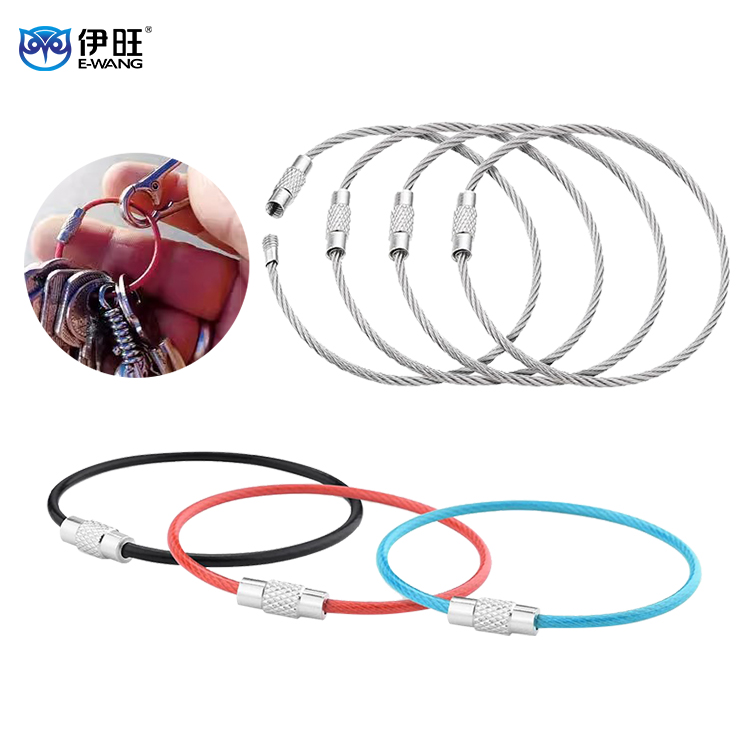
A stainless steel wire keychain is typically constructed from a single continuous strand of high-tensile stainless steel wire, often coated or uncoated, bent into a loop or figure-eight shape. Unlike split rings (the traditional coiled spring rings that destroy your fingernails), wire keychains use a screw-lock or pressure clasp mechanism.
**Key components:**
- **The Wire:** Usually 304 or 316 stainless steel, ranging from 2mm to 5mm in thickness.
- **The Connector:** A threaded sleeve or magnetic lock that secures the two ends of the wire.
- **The Split Ring Adapter:** A small ring attached to the wire loop to hold traditional keys.
### The Manufacturing Process
High-quality versions are made by cutting a length of steel wire, annealing it for flexibility, bending it into shape, and then polishing it to a mirror or matte finish. The connector is often machined from solid stainless steel bar stock, ensuring threads that won’t strip.
---
## Chapter 2: Why Choose Stainless Steel? The Science of Strength
Not all metals are created equal. Why stainless steel over titanium, aluminum, or brass?
### 1. Corrosion Resistance (The "Stainless" Promise)
Stainless steel contains at least 10.5% chromium. When exposed to oxygen, chromium forms a passive layer of chromium oxide, preventing rust. For a keychain that touches sweaty hands, rain, and pocket lint, this is critical.
- **304 Stainless Steel:** Good for everyday use (EDC). Resists fresh water and mild acids.
- **316 Stainless Steel (Marine Grade):** Superior for coastal environments. Resists saltwater and chlorides.
### 2. Tensile Strength
A 3mm stainless steel wire has a breaking strength of approximately 150-200 kg (330-440 lbs). You could hang a motorcycle engine from your keychain. The weak point is never the wire—it’s the connector, which quality brands reinforce.
### 3. Temperature Tolerance
Unlike plastic keychains that melt in a hot car or become brittle in freezing cold, stainless steel maintains its integrity from -80°C to 800°C (-112°F to 1472°F).
### 4. Hypoallergenic Properties
While some cheap steel contains nickel, high-quality 316L stainless steel is "low nickel" and safe for most people with metal allergies.
## Chapter 3: The Design Revolution – Why Wire Beats Split Rings
Let’s be honest: traditional split rings are a nightmare.
| Feature | Traditional Split Ring | Stainless Steel Wire Keychain |
| :--- | :--- | :--- |
| **Adding/Removing Keys** | Requires a tool or broken fingernails | Screw-open mechanism; 3 seconds |
| **Weight** | Heavy, solid metal | Lightweight, hollow-core wire |
| **Pocket Wear** | Sharp edges fray fabric | Smooth, rounded wire |
| **Key Organization** | Keys clump together | Keys slide freely along wire |
| **Breakage** | Coils unwind over time | Solid wire; no unwinding |
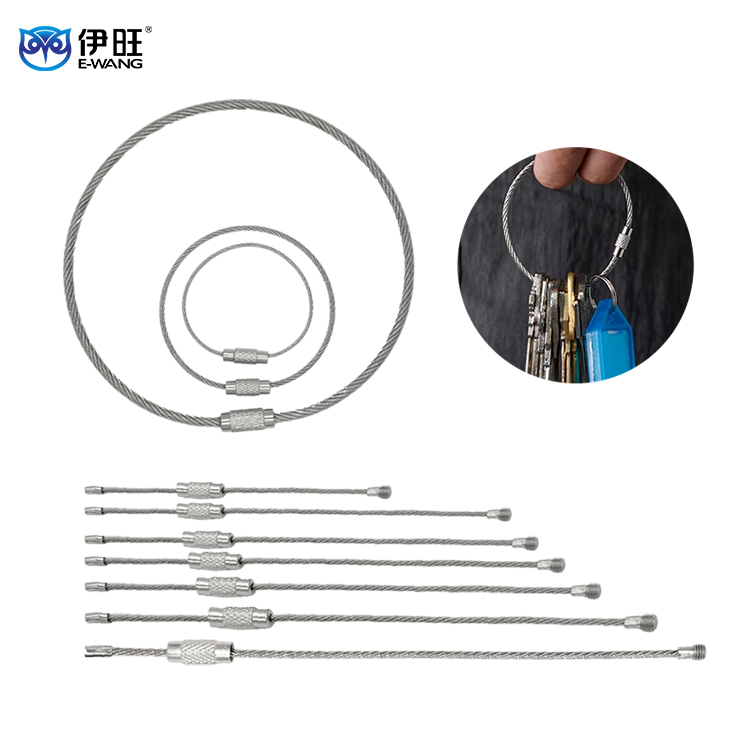
The wire design allows for **linear key organization**. Imagine your keys sitting flush against each other on a rail, rather than a tangled ball. This reduces jingling noise and protects your phone screen when they share a pocket.
---
## Chapter 4: Types of Stainless Steel Wire Keychains
When shopping on our store, you will notice variations. Here is how to choose.
### A. The Standard Screw-Lock (Most Popular)
- **Design:** Wire loop + threaded barrel.
- **Best for:** Daily drivers, students, office workers.
- **Pros:** Secure, inexpensive, easy to use.
- **Cons:** The screw can loosen over months (easily tightened).
### B. The Magnetic Breakaway
- **Design:** Strong neodymium magnets embedded in the connector.
- **Best for:** Paramedics, police, machine operators.
- **Pros:** Breaks away under extreme tension (safety), silent operation.
- **Cons:** Not for heavy loads (>5kg).
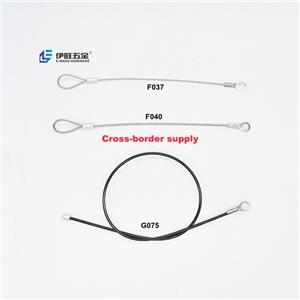
### C. The Coated Wire (Nylon or PVC)
- **Design:** Stainless steel core with a colored polymer sheath.
- **Best for:** Branding, style, reducing metal-on-metal noise.
- **Pros:** Available in black, red, blue, etc.; prevents scratching car ignitions.
- **Cons:** Coating may peel after 2-3 years.
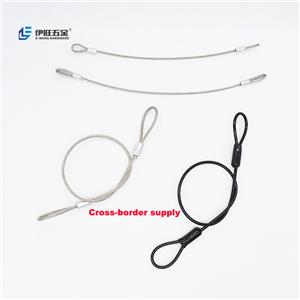
### D. The Figure-8 (Double Loop)
- **Design:** Two loops connected by a central bar.
- **Best for:** Large key sets (10+ keys).
- **Pros:** Separates car keys from house keys; excellent balance.
---
## Chapter 5: 10 Everyday Uses You Never Thought Of
A stainless steel wire keychain is a multi-tool in disguise.
1. **Emergency mini-carabiner:** Hook it to a belt loop, backpack zipper, or water bottle.
2. **Zipper pull replacement:** Thread it through a broken zipper tab on luggage.
3. **Measuring tape:** Standard lengths (4", 6", 8") can be used for rough measurements.
4. **Rescue tool:** The hardened steel wire can cut through zip ties or rope (with friction).
5. **Glasses holder:** Loop it through your sunglass arm to hang from a shirt collar.
6. **Key retainer for valet parking:** Hand over just the car key fob without disassembling your whole set.
7. **Bottle opener mount:** Attach a small bottle opener keychain; the rigid wire gives leverage.
8. **USB drive caddy:** Keeps your flash drive secure and accessible.
9. **Paracord anchor:** Weave paracord around the wire for a custom grip.
10. **Self-defense tool:** A 4" wire loop between your fingers adds impact force (check local laws).
## Chapter 6: How to Choose the Right Length and Thickness
**Wire Diameter:**
- **2mm (0.08")** – Ultra-light. For 1-3 keys only. Very flexible.
- **3mm (0.12")** – The Goldilocks zone. For 4-8 keys. Stiff but bendable.
- **4mm (0.16")** – Heavy duty. For 10+ keys or a small flashlight. Very rigid.
- **5mm (0.20")** – Industrial. Overkill for most users.
**Loop Length (Inner circumference):**
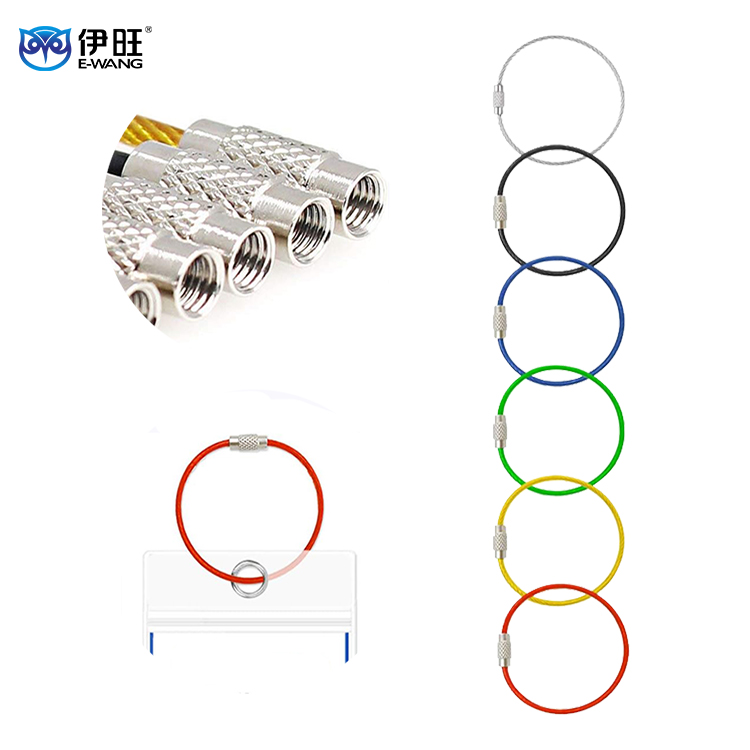
- **3" (7.6 cm)** – Fits 2-4 keys tightly. Minimalist.
- **4" (10 cm)** – Fits 5-7 keys. Standard EDC size.
- **5" (12.7 cm)** – Fits 8-10 keys. Allows keys to slide easily.
- **6" (15.2 cm)** – Fits 10+ keys or large fobs.
**Pro tip:** Measure your key fob’s length. The loop diameter must be larger than your fob’s longest side, or the keys won't rotate into a flat stack.
---
## Chapter 7: Maintenance – Keep It Looking New for a Decade
Stainless steel is "low maintenance," not "no maintenance." Follow these three steps annually.
### Step 1: Clean the Threads
The screw-lock accumulates pocket lint. Use a toothpick or compressed air to clean the threads. Apply a tiny drop of light machine oil (sewing machine oil) to the threads every 6 months.
### Step 2: Remove Surface Rust (Rust is rare, but possible)
If you bought cheap 201 stainless steel, red rust may appear. For 304/316, you might see "tea staining" (brown discoloration).
- **Remedy:** Mix baking soda and water into a paste. Scrub with a soft toothbrush. Rinse.
### Step 3: Restore Shine
- **Mirror finish:** Use a microfiber cloth and a drop of baby oil.
- **Matte finish:** Clean with soapy water only (abrasives will scratch the matte texture).
### What NOT to do:
- Never use bleach or chlorine cleaners (they corrode stainless).
- Never put it in a dishwasher (heat won't hurt steel, but detergents can pit the surface).
## Conclusion: Make the Switch Today
Your keys are the gateway to your home, your car, and your life. They deserve a keychain that respects their importance.
The stainless steel wire keychain is not a fashion accessory—though it certainly looks modern and professional. It is a **tool**. It is a promise that you will never again be stranded with a snapped key ring. It is a declaration that you value durability over disposability.
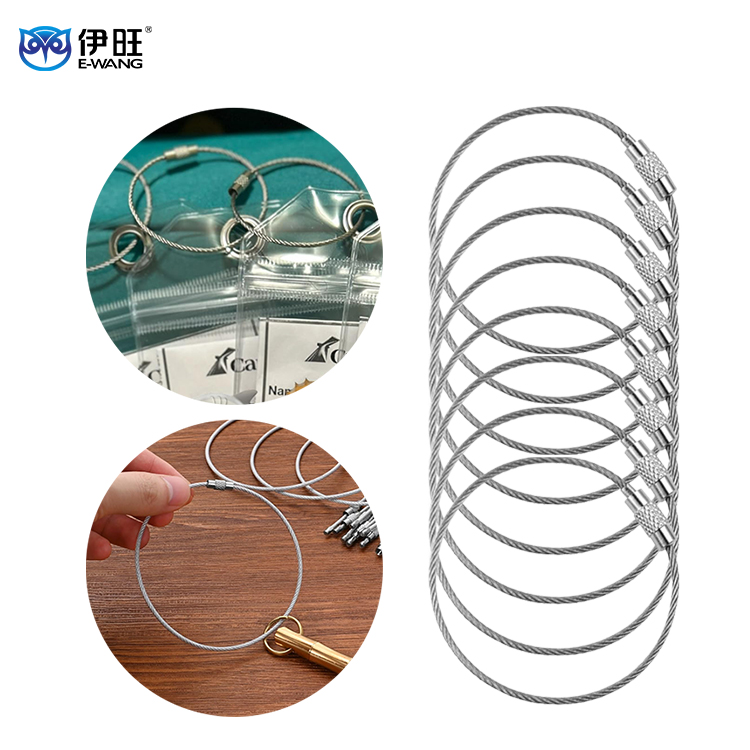
We have curated the finest selection of stainless steel wire keychains on this site. From minimalist 3mm loops to heavy-duty 5mm marine-grade options, from sleek silver to stealth black coated wires, you will find the perfect EDC companion.